Author: unimorweb

  • How to Make Smart Home Renovations

    How to Make Smart Home Renovations

    For a good ROI on your house consider this advice from the Canadian Appraisal Institute on how to make smart home renovations. It’s been said before: We are the generation of renovation. Ask any friend and I bet my lunch that almost all of them have either done or will be doing a renovation.

    There are two main reasons for renovating. The first is to improve your current home, based on your own personal needs (not wants, needs). This is the primary reason to justify expensive projects, such as adding a second-story addition, finishing the basement, or extending the kitchen. It’s a renovation that will require a lot of work, money, and inconvenience, but will allow you and your family to enjoy the home more fully in the up-coming years.

    The second reason people use to justify a renovation is that they are adding value to their home. This is a problem. Evidence shows that it’s a lot easier to justify spending money if you think you’re getting a rebate and convincing yourself that your $15,000 bathroom remodel will add $20,000 in value to your home is the psychological version of a rebate. The big problem with this is that people will then use these mental gymnastics to justify financing a renovation—and take on debt today, in order to increase your home’s value tomorrow is not financially savvy.

    For those savvy enough to understand that a home renovation isn’t an investment, here’s a few tips on how to plan a smart renovation. According to the Appraisal Institute of Canada (AIC) homeowners should follow these 4 general tips when renovating:

    #1. Choose improvements with long life expectancy

    These are the less-than-sexy remodel jobs, such as new roofing (every 15 to 25 years for asphalt tile), a new furnace (every 10 to 15 years), or a new A/C unit (every 10 to 15 years). These improvements can offer savings in the year of renovation and in the years to come. For instance, replacing all the windows in your home could cost $10,000 or more, but the AIC estimates that this renovation will provide a return on investment (ROI) between 50% and 75%. Since outdated or improperly working windows and doors are major contributors to a home’s energy loss—up to 20% by some estimates—repairing or replacing these features will provide immediate savings and will add value to your home.

    #2. Invest in modern updates, particularly in high traffic areas

    The kitchen and bathrooms are key areas that hold their value if the finishes are contemporary and neutral. However, an entire renovation isn’t always required. For instance, wooden kitchen cabinets can be easily updated by resurfacing the doors and changing the hardware. You can also modernize and update the look of your kitchen by changing the countertop and replacing lighting and plumbing fixtures.

    However, if your kitchen or bathroom layout just doesn’t work or your cabinets are beyond the point of resurfacing, it may be time to consider a full renovation. According to the AIC, you can expect a 75% to 100% ROI on a major kitchen remodel or extension.

    But I need to point out that even the most well-thought out and contemporary remodel today will look dated in 15 years, so don’t bank on a dollar-for-dollar return on your remodel budget if you don’t plan on selling for a few decades. Still, if you’re renovating with your own family in mind, you can develop a smart plan by asking for features that are easy to update when it comes time to sell. A good designer and contractor can easily help in this situation.

    #3. Don’t overlook (or underestimate) the more inexpensive remodel jobs

    The return on investment for a fresh coat of paint is up to 165%—the best ROI of any home improvement. Other smaller remodel updates that don’t break the bank include replacing the front door, updating the home’s lighting fixtures, and adding (or rejuvenating) landscaping.

    Inexpensive remodel jobs aren’t isolated to a few fixtures, either. Removing carpet and installing hardwood goes a long way to increasing your home’s appeal to potential buyers and according to the AIC, the ROI on floor upgrades ranges from 50% to 75%. That means if you spend $5,000 redoing your floors, you can expect to recoup anywhere from $2,500 to $3,800 of your costs.

    #4. Consider energy efficiency

    According to a variety of appraisal sources, energy efficient renovations are considered to have one of the highest paybacks, relative to cost.

    Percentage recovered upon resale:

    Kitchen upgrade:  75% – 100%
    Bathroom upgrade:  75% – 100%
    Interior painting:  50% – 100%
    Roof replacement:  50% – 80%
    Replace furnace/heating system:  50% – 80%
    Expansions (addition of rooms):  50% – 75%
    Doors and windows:  50% – 75%
    Deck:  50% – 75%
    Installation of hardwood floor:  50% – 75%
    Construction of a garage:  50% – 75%
    Fireplace (wood or gas):  50% – 75%
    Central air conditioning:  50% – 75%
    Finished basement:  50% – 75%
    Wood fence:  25% – 50%
    Cement driveway:  25% – 50%
    Landscaping:  25% – 50%
    Pool:  10% – 40%
    Skylights:  0% – 25%

  • Credit Reporting 101

    Credit Reporting 101

    Your credit file contains information on all of your credit accounts submitted to the credit bureaus, including balances, limits, payment history, etc…, as well as identification information such as your name, address, age, social insurance number, marital status, spouse’s name and age, number of dependents, occupation, and employment history.

    What is a credit score?

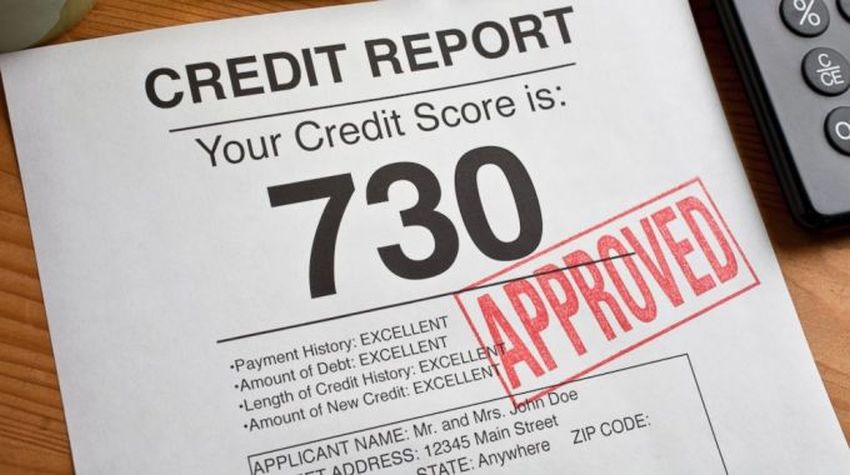
    In Canada, credit scores range from 300 up to 900 points, which is the best score you can have. According to TransUnion, 650 is the magic middle number – a score above 650 will likely qualify you for a standard loan while a score under 650 will likely bring difficulty in receiving new credit.

    Lenders who pull your credit bureau file may see a slightly different number than you see when you pull your own file. This is due to the fact that each creditor applies a specific set of risk rules, giving and taking points for different purposes or preferences. This proprietary method of scoring will make a difference in the final calculation. The score you pull for yourself is calculated using an algorithm created for consumers that approximates these different formulas, and should still be in the same numerical range as the lenders’ scores.

    How long is information kept on my credit file?

    Actual inquiries made by credit grantors minimum of 2 years, however it may only affect you credit for the last 12 months
    Credit history and banking information 6 years from the last activity date
    Bankruptcies 6 years from the date of discharge (1st bankruptcy)
    Judgments, foreclosures, garnishments 6 years from the date filed
    Collections 6 years from the date of last activity
    Secured loans 6 years from the date filed
    Credit counselling, consumer proposals, orderly payment of debt (OPD) 3 years from the date settled or completed

    How can a low credit rating affect my life?

    Credit scoring is used by lenders, insurers, landlords, employers, and utility companies to evaluate your credit behaviour and assess your creditworthiness.

    1. Applying for a loan. Your credit score will be a big factor into the decision of whether you are approved or denied your application for more credit. Your credit score will also affect the interest rate and credit limit offered to you by the new credit grantor – the lower your credit score, the higher the interest rate will be and the lower the credit limit offered – the reason for this is you are considered more of a credit risk.

    2. Applying for a job. A potential employer may ask your permission to check your credit file and based on what they read, they may decide not to hire you due to your poor credit history. Yes, having bad credit could cost you a job!

    3. Renting a vehicle. When you sign an application to rent a car, the rental company can check your credit history to determine what their risk may be when they loan you their property. So although you are not applying for credit, the application documents you sign provide your written permission to access your credit information.

    4. The same is true when applying for rental housing – the landlord may assess your tenant worthiness and their risk by factoring in your credit rating and score, and they could pass you over for someone with a better credit rating.

    What information is used to calculate my credit score, and what factors will lower my score?

    If you have tried looking on the consumer reporting agencies’ websites, you have seen they provide very little information as to how your credit score is calculated. They believe this information is proprietary and therefore their ‘secret’. They do, however, provide a list of the main factors which affect your credit score:

    1. Payment History
    Equifax says: “Pay all of your bills on time. Paying late, or having your account sent to a collection agency has a negative impact on your credit score.”
    TransUnion says: “A good record of on-time payments will help boost your credit score.”

    2. Delinquencies
    Equifax lists: “Serious delinquency; Serious delinquency, and public record or collection field; Time since delinquency is too recent or unknown; Level of delinquency on accounts is too high; Number of accounts with delinquency is too high.”
    TransUnion lists: “Severity and frequency of derogatory credit information such as bankruptcies, charge-offs, and collections.”

    3. Balance-to-Limit Ratio
    Equifax says: “Try not to run your balances up to your credit limit. Keeping your account balances below 75% of your available credit may also help your score.”
    TransUnion says: “Balances above 50% of your credit limits will harm your credit. Aim for balances under 30%.”

    Ok, so avoid maxing out your credit – because if you don’t really need more credit you’ll be able to get it, and if you do really need it then you are more of a risk.

    4. Recent Inquiries
    Equifax says: “Avoid applying for credit unless you have a genuine need for a new account. Too many inquiries in a short period of time can sometimes be interpreted as a sign that you are opening numerous credit accounts due to financial difficulties, or overextending yourself by taking on more debt than you can actually repay. A flurry of inquiries will prompt most lenders to ask you why.”
    TransUnion says: “Avoid excessive inquiries. When a lender or business checks your credit, it causes a hard inquiry to your credit file. Apply for new credit in moderation.”

    There are two types of Credit Bureau file inquires: “hard inquiries” such as an application for new credit, which will lower your score; and “soft inquiries” such as requesting your own credit report, and businesses checking your file for updates to your existing credit accounts for approving credit limit increases, for example – these will not appear on your file or lower your credit score. So be careful to only apply for credit you really need.

    5. Length/History of Accounts
    Equifax says: A “common negative score factor… [is the] length of time accounts has been established is too short”
    TransUnion says: An established credit history makes you a less risky borrower. Think twice before closing old accounts before a loan application.”

    Having a longer history on your credit accounts earns you more points, so avoid closing your accounts if you may need them in the future. A good credit history is built over time – sorry, but there is no quick fix for this one.

    6. Variety of Credit Accounts
    TransUnion says: “A healthy credit profile has a balanced mix of credit accounts and loans.”

    Having a mix of credit products (credit card, retail store card, line of credit, car loan, etc…) will procure more points on your file than having only one type of credit, such as only credit cards.

    7. Too Many Accounts
    Having a lot credit accounts, especially if many of them carry balances, is another warning sign of financial distress, so if the Credit Bureaus think you have too many, they will deduct points.

    Other “derogatory” factors which negatively affect your credit rating and the Credit Bureaus don’t like to mention to you are:

    1. Errors
    One of the major causes of point loss to your credit rating are bureau reporting errors. Errors can be delinquent accounts reporting on your file that do not belong to you, late payments that were not late, and credit that is created from identity fraud – therefore not your credit. The Credit Bureaus are paid by the creditors who pull credit bureau files and in turn who report to them. Credit reporting is done electronically, and Credit Bureaus accept the information they are sent without any investigation into the accuracy of the information. Therefore, is it critical that you pull your credit bureau file at least once a year. Only you will know when there is an error on your file, and it is up to you to have the credit bureaus fix it.

    Look for these common errors:

    • Wrong mailing addresses
    • Incorrect Social Insurance Number
    • Signs of identity theft
    • Errors in your credit accounts
    • Late payments
    • Unauthorized hard inquiries

    If there is an error on your file you must contact the Credit Bureau, then it is up to the Bureau to investigate your complaint and to verify the information contained in your file by contacting the reporting creditor. When contacted by the Credit Bureau, the reporting creditor will have to verify the item they have placed on your file. You are entitled to be part of that process. Check your credit again 30-60 days after disputing errors. If any of the disputed inaccuracies remain, contact the creditor to further your dispute and determine if the item can be taken off your credit profile.

    2. Moving/Time at Address
    As previously discussed, a large number of credit file requests within a short period due to moving will lower your credit score. But on top of that, the length of time at your current address will influence your score, so try not to move a lot as it will affect your credit rating. The longer you remain at one address, the more points you receive.

    3. Changing Employment Frequently
    The longer you stay at a job, the higher points your credit score receives. You are seen as having a secure job and therefore being a secure, less risky credit consumer.

    4. Having No Mortgage or Housing Information
    The Credit Bureaus assign certain points for those who have mortgages and those who rent, and deduct points for those whose housing situation is unknown to them. As soon as you pay off your mortgage, the reporting account is removed from your file and you are in the unknown category, which will actually remove points from your credit rating! Credit card and other credit account history will remain on your account even after being paid off and closed, but unfortunately a paid mortgage does not benefit your credit rating. Imagine, you own your own home and that does not benefit your credit rating – does that even make sense? Also, not all mortgages report to the Credit Bureaus.

    5. Having High Revolving Credit Balances
    When you have high balances that are rotating between different credit accounts, this is a warning sign that you could be in financial trouble and therefore you could be considered a credit risk.

    6. Having No Debt
    Believe it or not, having no debt is also bad for your credit score! Here we go again – if you don’t need to borrow money creditors will be trying to throw it at you. If you do need to borrow money and have no debt or debt history well, you will have a harder time of it. If you do not have a history of credit use on your file to provide something for creditors to evaluate, they will see that as a risk, and you will be deducted points on your score for not having credit accounts.

    Tips to Raise Your Credit Score

    1. Correct errors, and track your report for future errors. Order your credit file from each bureau at least once per year.

    2. Lower your balances. If your debt levels are above 50% of your available limit, create a payment plan to reduce your balances.

    3. The biggest “tip” to having a good credit rating and a high credit score is to continually use credit and to repay that credit on time all the time. Set up automatic payments to help with this.

    4. If you have no credit history, or need to rebuild your credit, open a secured credit card account. You pay a deposit, which sets the limit of your card, then use it like a regular credit card. The secured credit card provider reports your payment habits to the credit bureau(s), so you will be able to gain points with an account in good standing.

    5. Look over our list, read your credit report, and identify any areas that could be improved for a higher credit rating.
    Remember, “your credit rating is not a reflection of your personal worth – it is merely a credit reporting tool” – Margaret H. Johnson. The good news is your credit rating is like your self-esteem, sometimes in your life it will be high and sometimes it will be low – however, you can always rebuild it over time!


    ~ Adapted from Debt Canada

  • Top 10 Resume Mistakes to Avoid

    Top 10 Resume Mistakes to Avoid

    Aren’t sure what to put on your resume? Make sure you don’t include any of these common errors. It’s deceptively easy to make mistakes on your resume and exceptionally difficult to repair the damage once an employer gets it. Therefore, prevention is critical, whether you’re writing your first resume or revising it for a mid-career job search. Check out how to write the perfect resume by following these top 10 resume mistakes to avoid.


    1. Typos & Grammatical Errors

    Your resume needs to be grammatically perfect. If it isn’t, employers will read between the lines and draw not-so-flattering conclusions about you, like: “This person can’t write,” or “This person obviously doesn’t care.”


    2. Lack of Specifics

    Employers need to understand what you’ve done and accomplished. For example:

    A. Worked with employees in a restaurant setting.
    B. Recruited, hired, trained and supervised more than 20 employees in a restaurant with $2 million in annual sales.

    Both of these phrases could describe the same person, but the details and specifics in example B will more likely grab an employer’s attention.


    3. Attempting the “One–size–fits–all” Approach

    Whenever you try to develop a one-size-fits-all resume to send to all employers, you almost always end up with something employers will toss in the recycle bin. Employers want you to write a resume specifically for them. They expect you to clearly show how and why you fit the position in a specific organization.


    4. Highlighting Duties Instead of Accomplishments

    It’s easy to slip into a mode where you simply start listing job duties on your resume. For example:

    Attended group meetings and recorded minutes;
    Worked with children in a day-care setting;
    Updated departmental files.

    Employers, however, don’t care so much about what you’ve done as what you’ve accomplished in your various activities. They’re looking for statements more like these:

    Used laptop computer to record weekly meeting minutes and compiled them in a Microsoft Word-based file for future organizational reference.
    Developed three daily activities for preschool-age children and prepared them for a 10-minute holiday program performance.
    Reorganized 10 years worth of unwieldy files, making them easily accessible to department members.


    5. Too Long or Too Short

    Despite what you may read or hear, there are no real rules governing resume length. Why? Simply, because human beings who have different preferences and expectations where resumes are concerned, will be reading it. That doesn’t mean you should start sending out five-page resumes, of course. Generally speaking, you usually need to limit yourself to a maximum of two pages. But don’t feel you have to use two pages if one will do. Conversely, don’t cut the meat out of your resume simply to make it conform to an arbitrary one-page standard.


    6. A Bad Objective

    Employers do read your resume objective, but too often they plow through vague pufferies like, “Seeking a challenging position that offers professional growth.” Give employers something specific and, more importantly, something that focuses on their needs as well as your own. Example: “A challenging entry-level marketing position that allows me to contribute my skills and experience in fund-raising for non-profits.”


    7. No Action Verbs

    Avoid using phrases like “responsible for.” Instead, use action verbs: “Resolved user questions as part of an IT help desk, serving 4,000 students and staff.”


    8. Omitting Important Information

    You may be tempted, for example, to eliminate mention of the jobs you’ve taken to earn extra money for school. Typically, however, the soft skills you’ve gained from these experiences (e.g., work ethic, time management) are more important to employers than you might think.


    9. Visually Too Busy

    If your resume is wall-to-wall text featuring five different fonts, it will most likely give the employer a headache. So show your resume to several other people before sending it out. Do they find it visually attractive? If what you have is hard on the eyes, revise.


    10. Incorrect Contact Information

    I once worked with a student whose resume seemed incredibly strong, but he wasn’t getting any bites from employers. So one day, I jokingly asked him if the phone number he’d listed on his resume was correct. It wasn’t. Once he changed it, he started getting the calls he’d been expecting. Moral of the story: double-check even the most minute, taken-for-granted details.

  • How to Create a Budget

    How to Create a Budget

    A budget is a plan, an outline of your future income and expenses that you can use as a guideline for spending and saving. Only 47% of Canadians use a budget to plan their spending. But Canadians are feeling more in debt than ever with 90% saying they have more debt today than five years ago. A budget can help you pay your bills on time, cover unexpected emergencies, and reach your financial goals — now and in the future. Most of the information you need is already at your fingertips and the guidelines below will show you how to create a budget.

    Setting Up a Monthly Budget

    It’s a good exercise to document your own actual spending habits for a month or two, and then compare them to this model. This can be a quick way to find out if you are overspending in certain areas.

    STEP 1: Calculate Your Income
    To set a monthly budget, you need to determine how much income you have. Make sure you include all sources of income such as salaries, interest, pension, and any other income sources, including a spouse’s income if you’re married. Determine your pay after deductions, and then use the following chart to help figure out what your monthly take-home pay is:

    • Weekly cheques, multiply by 4.333
    • Every-two-week cheques, multiply by 2.167
    • Twice-a-month cheques, multiply by 2
    • Irregular annual income, divide the net total by 12

    You also want to make sure you add in other sources of income, such as interest income, spousal support, child support, tenant rent, and other payments. As with your pay cheques, determine a monthly average for these streams. Using the downloadable Budget Worksheet, write a dollar figure next to each relevant income source. Make sure that the figure you write down is the amount you receive from each income source on a monthly basis.

    STEP 2: Estimate Your Expenses
    The best way to do this is to keep track of how much you spend each month. The first step is to sum up just where (and how much) you think you are spending. The Expense Worksheet divides spending into fixed and flexible expenses. If some of your expenses for one or more category change significantly each month, take a three-month average for your total. As for the other categories, you might prefer to split them into more narrow subgroups separating food, clothing, and entertainment, for example.

    STEP 3: Figure Out the Difference
    Once you’ve totalled up your monthly income and your monthly expenses, subtract the expense total from the income total to get the difference. A positive number indicates that you’re spending less than you earn – congratulations! A negative number indicates that your expenses are greater than your income and gives you an idea of where you need to trim expenses and by how much.

    Well done! You’ve created a budget. The next step is to make adjustments to this outline in order to achieve your financial goals. Track your budget over time to make sure you’re on track. You need to start making records of your actual income and expenses. This information will help you to understand any “budget variances” – the difference between the amount you planned to spend in a certain category, and the amount you actually spent. Prepare to be surprised for the first couple of months. You may not need to track your spending indefinitely. Usually, a couple of months are all you need to get an idea of where your money is going.

    Helpful Tip

    The 50/20/30 Rule
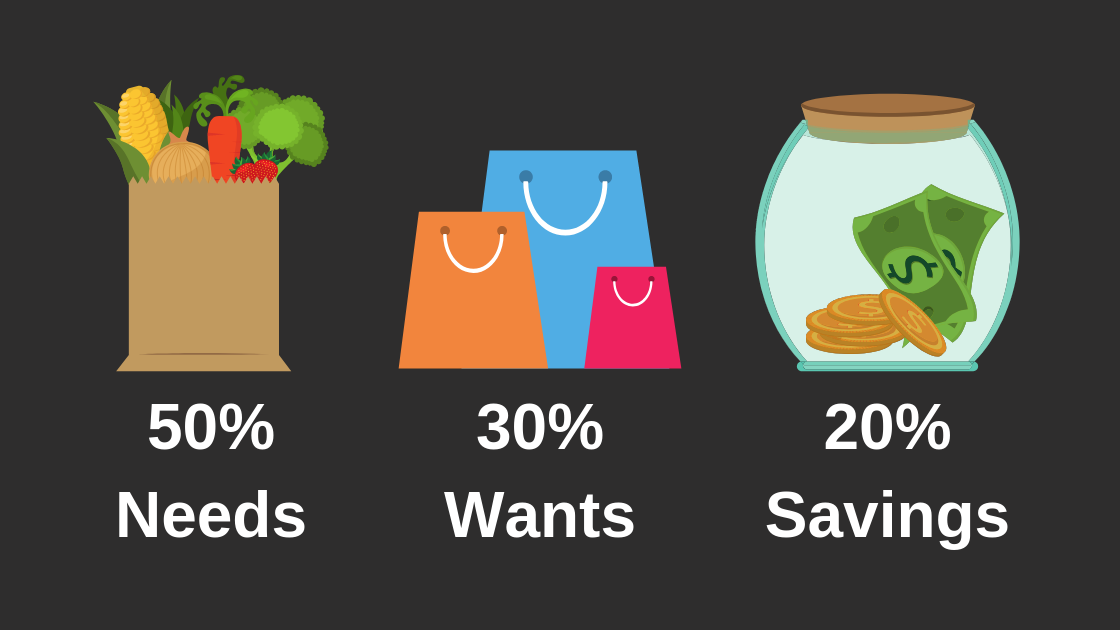
    When creating a budget, you can list each and every monthly expense you incur as its own line item, or you can combine some of your expenses and follow what’s known as the 50/20/30 rule. The benefit of the 50/20/30 rule is that it groups certain expenses together to make your budget easier to track. The 50/20/30 rule splits your living expenses into three main categories:

    1. Fixed costs that stay the same month after month, such as your mortgage, car payment, and cable bill, should take up 50% of your income.
    2. Variable costs that can change from month to month, such as entertainment, groceries, and clothing, should take up 30% of your income.
    3. Savings, which should take up 20% of your income.

    The 50/20/30 rule allows you to retain some flexibility in your budget while saving a nice percentage of your income. While you can always adjust these percentages to accommodate your circumstances, limiting your fixed costs to 50% of your income should leave you with enough money left over to save and cover your variable expenses. Along these lines, allocating 30% of your income to variable costs means you’ll have a decent amount of wiggle room within that category alone.

  • What to Do With Your Tax Refund

    What to Do With Your Tax Refund

    Another tax season is behind you – it’s time to relax, sit back, and wait for that return. The average Canadian is entitled to a refund, according to Canada Revenue Agency, with the average refund for last year’s income tax totaling $1,580. Before you splurge, however, let’s take at a look at the benefits of saving your tax refund and putting it to better use. Here are our top tips for what to do with your tax refund:

    1. Stop treating your return like found money

    Although most Canadians are happy to receive a tax refund, there’s very little reason for celebration – you’re actually giving Canada Revenue Agency an interest-free loan. Many Canadians think of a tax refund as a bonus, even though it’s your own money to begin with. Instead of treating your tax refund like found money, it’s important to spend it prudently.

    1. Pay off any outstanding bills

    If you have outstanding bills, using your tax refund to pay them off is probably the best option for you. There’s nothing worse than the stress of being behind. Take this opportunity to get ahead of the game for once.

    1. Pay down your credit card debt

    Credit card debt can build quickly, but it’s hard to whittle down once it mounts. If you have outstanding debt on your credit cards, the responsible thing to do would be to put your tax return towards that debt. Of all the debt you have, credit card debt is most likely to have the highest interest rate running from 10% – 29%. By paying that debt down first, you’ll actually be saving money in interest later.

    1. Put some of it towards your mortgage

    You can’t beat the guaranteed rate of return of paying down your mortgage. If you have a mortgage that allows you to make additional payments without penalty (and most mortgages will allow you to make an annual lump sum payment of 5% – 25% of the mortgage value), this might be the perfect opportunity to use that to your advantage. The more you pay now, the less you pay in interest later.

    1. Invest in your future

    If you haven’t started an RRSP, maybe it’s time. Your return might not amount to much now, but over the years your investment will grow. This is a particularly good idea if you are feeling no other financial pressures at the moment. A tax return can also be the perfect way to launch an RESP for your child. Consider spending your tax refund to invest for your child’s education – a deposit to an RESP (Registered Education Savings Plan) could be eligible for 20% grant for children up to age of 18 for contributions up to $2500.

    1. Start an emergency fund

    Doesn’t it sometimes seem like bad things happen either when you’re least prepared or when you’re least able to cope? You just paid a huge vet bill and your washing machine suddenly dies. You finally paid off your credit card debt and your car breaks down. These situations happen all the time, and sometimes it feels like you’ll never get ahead. Without an emergency fund, situations like these can be stressful. Why not take this extra cash and set it aside for those little emergencies? When the time comes – and it will – you’ll be glad you did.

    1. Upgrade your job skills

    Have you recently found yourself wanting to return to school? Have you dreamt of taking courses to upgrade your skills? Will doing so help increase your salary? If you answered ‘yes’ to any of these questions, you might want to consider using your return to invest in yourself. This is an especially good idea if it will help to boost your income in the long run.

    1. Treat yourself to something nice

    Sometimes being responsible is all we do. If you’re one of those people who seem to always be doing the right thing – saving money, paying down bills, saying no when you really want to say yes – then maybe you need to do something nice for you. Buy yourself a new outfit. Go get your hair done. Take yourself out for a nice lunch. Go golfing. Spoiling yourself is sometimes the best course of action – especially if it’s something you don’t often do.

  • 5 Ways to Pay Off Your Mortgage Faster

    5 Ways to Pay Off Your Mortgage Faster

    Purchasing a home is a major accomplishment, but with these 5 Ways to Pay Off Your Mortgage Faster, paying off your mortgage as early as possible will be the best investment you can make. Below are a few easy ways you can pay off your mortgage faster:

    1. Accelerated bi-weekly payments
    Instead of paying your mortgage on a monthly basis 12 times per year, pay your mortgage every two weeks for a total of 26 payments each year.

    Example: A $300,000 mortgage paid on a monthly basis with a 3% interest rate over 25 years will cost you $125,920.44 in interest. However, if you increase your payment frequency to accelerated bi-weekly payments, you will shave nearly three years off of your amortization schedule, and save $16,058.57 in interest.

    2. Round up your mortgage payments
    Make no mistake: Every dollar counts when it comes to paying off your mortgage. The quicker you can pay off your mortgage, the more you will save in interest. A painless way to make your mortgage disappear faster is to round up your mortgage payments. So if your accelerated bi-weekly mortgage payments are $543, consider rounding up to $600 instead. The extra $57 will do wonders to your mortgage balance and chances are you will barely notice a difference in your monthly budget. If you receive a raise, instead of increasing the cost of your lifestyle in the short term, consider throwing the extra amount you make onto your mortgage instead.

    Example: Bi-weekly payments on a $230,000 mortgage with a 2.75% interest rate over 30 years would be $468.53. Increase those bi-weekly payments by just $31.47 to $500, and you’ll shave nearly six years off of the amortization schedule.

    3. Put ‘found’ money towards your mortgage payments
    Unexpected sources of money such as a birthday cheque from a relative or a bonus at work are considered sources of ‘found’ money. ‘Found’ money can be easily applied to your mortgage without any impact to your budget because it wasn’t money you were expecting or counting on. Consider increasing your RRSP contributions, and then put your income tax refund directly towards the principal of your mortgage.

    Example: A one-time payment of $5,000 on a $250,000 mortgage at 3.75% over 30 years will decrease your mortgage amortization by over 12 months.

    4. Make a lump sum anniversary payment
    Most banks will allow you to make an extra mortgage payment each year, which is applied directly to the principal. Taking advantage of this by making a lump sum payment, even if it’s as small as $100 a year, is a great way to chip away at your mortgage.

    Example: An annual lump sum payment of $250 on a $400,000 mortgage at 3.50% over 25 years, combined with a bi-weekly payment frequency will decrease your mortgage amortization by over 3.5 years.

    5. Stay informed
    Once you have a mortgage and start making your payments, it can be easy to just forget about it because it’s an automatic payment. To be an informed homeowner, you need to keep up-to-date on interest rates and new mortgage options. You could potentially save a ton of money just by understanding what your options are.

    Example: Let’s say that interest rates have dropped since you took out your mortgage a few years ago, but you are in the middle of a five-year fixed term with your bank. By understanding what the penalties are for breaking your mortgage, and reapplying for a lower interest rate, you could potentially save thousands of dollars over the long run.

    While paying down your mortgage early will mean less interest paid over the lifetime of the mortgage, and a shorter amortization schedule, it’s not always the best decision for every homeowner. For example, if you have high interest debt on a credit card, no emergency fund savings, or if you haven’t started saving for retirement yet, the interest you would save on your mortgage will not be as beneficial to you as dealing with other financial issues. Armed with information and commitment, these tips will help you pay off your mortgage faster. The freedom that being completely debt-free brings is a dream for many Canadians, so take the time to do some calculations and figure out what options are right for you.


  • Closing Costs: What You Can Expect

    Closing Costs: What You Can Expect

    It is important to be fully aware of all the costs involved in buying a home, preferably before you go house hunting. Knowing in advance what these additional ‘costs’ are, over and above the down payment that you might have, will help you plan for a smooth closing and avoid any unpleasant surprises. You should allow at least 2% of the purchase price for closing costs, although they could be as high as 4%.

    Below is a comprehensive list of closings costs that you might incur, but remember that they are only estimates and should be used as a guideline.

    Legal Fees & Disbursements
    A lawyer will charge a fee for their professional services involved in drafting the title deed, preparing the mortgage, and conducting the various searches. The disbursements, on the other hand, are out-of-pocket expenses incurred, such as registrations, searches, supplies, etc… The actual fee that the lawyer will charge will depend entirely upon the deal between you and your lawyer. Be sure to ascertain exactly what this will amount to in a worst-case situation. A typical purchase transaction for a $200,000 property with one mortgage will range between $800 to $1,200, including disbursements. We recommend you call one or two lawyers and obtain a quote directly from them including both their fee and estimates of disbursements before choosing which one you’d like to use.

    Land Transfer Tax
    There is usually a land transfer tax that is charged on closing when the property is transferred to your name and it can vary depending on the price of the home, whether or not you are a first time home buyer and which city you live in. Learn more about Land Transfer Tax Ontario.

    Mortgage Insurance
    You should budget for insurance on your new home. Insurance costs can include default mortgage insurance, homeowners insurance, mortgage life insurance and title insurance.

    Property Tax & Prepaid Utilities Adjustments
    At the time of a sale, the lawyer for the buyer must confirm that local taxes have been paid up to date. If they are, a Tax Certificate is issued, from which any adjustments can be made – usually requiring the buyer to compensate the seller for any prepaid taxes. If they are not up to date, the municipality requires that the seller pay them off from the proceeds of the sale. Therefore, remember that if the previous owner has prepaid property taxes or other utilities for the year, they will be credited the prepaid portion on closing. If they paid all their taxes by April, expect a large adjustment cost on closing.

    Property Appraisal
    If your lender requires an appraisal report to be completed, it will have to be done before they hand over any mortgage money. They want to be assured that the property is worth what you are either paying for it, or valuing it for, and the cost normally ranges between $150 to $300 depending upon the location and complexity of the property.

    Home Inspection
    A report commissioned by a property owner or purchaser, usually to verify the condition of a property prior to the ‘firming up’ of a Real Estate transaction. The scope and detail may vary, but most reports indicate the specific problem and the cost to repair. Depending on the size and location of the property, a home inspection is around $300.

    Interest Adjustment (IA)
    If you arrange to make your mortgage payments monthly on the first day of the month, and your transaction closes after the first day of the month, your lender may charge you interest on closing up to the first theoretical payment date, called the Interest Adjustment Date (IAD). Your mortgage agent will calculate this for you. Remember, that all mortgages are paid in arrears so if your possession date is June 1st, and you choose to pay monthly, then your first payment will be July 1st. In this example there is no Interest Adjustment payable. However, if you moved in on May 29th, with your first payment on the first of the month, your first payment would still be July 1st, but there will be a three day Interest Adjustment (from May 29th to the ‘official start date’ of June 1st).

  • How to Budget for the New Year

    How to Budget for the New Year

    New Year’s resolutions come and go. A sad and small amount often work out like you’d planned and the rest are forgotten about, or perhaps regretted later on. Losing weight and creating a budget are two of the most common New Year’s goals.

    This year, you can shake off old habits and create new ones that last. The key is being realistic and using a system that works. Only you can decide how to budget your money, but with a little guidance from a financial expert and Mint software, you can set those plans in motion and keep track of your daily progress.


    Baby Steps to Get Out of Debt

    Nationally-syndicated radio talk show host and financial expert Dave Ramsey advises clients and listeners to get out of debt first and foremost, then build wealth. His is one of the simplest, most effective budget approaches, and nearly anyone can follow it. Ramsey explains what he calls the “7 Baby Steps” as a journey to debt control and ultimately living debt free. Each of the steps should happen in order, and include:

    • Start an emergency fund
    • Pay off debt
    • Build your emergency fund
    • Invest
    • Save for college (if applicable)
    • Pay off mortgage
    • Build wealth & give to charity

    There’s a method to the order. Your emergency fund is there to rescue you in case of a dire circumstance. Everyone needs this fund. It’s for those unexpected things that fall into your lap when you’re not looking. Start with $1,000, and you’re covered for some of the smaller things that life can throw your way.

    “Pay off debt” is a small statement, but it’s sometimes an enormous feat of dedication and endurance. This baby step is near the top of Ramsey’s list for a reason — you can’t make much financial progress for yourself while you’re building someone else’s wealth. He suggests paying off the smallest debts first, then working toward larger ones.

    Next comes building your emergency fund to a healthy level. Time was; 3 months’ pay was plenty. It could carry you over in case of job loss, medical bills, or other large, unexpected emergencies. Ramsey recommends a more generous approach, with 6 to 9 months’ pay set aside. Build this up, and you’re ready to tackle the next baby step.

    Investments, college fund, paying off your mortgage, and ultimately building wealth are the last items on the list. You might need an advisor before stepping into investments, and a college fund might not be important to your family for any number of reasons. Paying off a mortgage, if you have one, is that last big hurdle before debt-free living. After that, you build wealth and live generously.


    Mint Can Help You Handle the Particulars of Budgeting

    Getting out of debt is important. But when you drill down, there is a lot more to think about. While you’re saving for an emergency fund, paying off credit cards, and thinking about retirement, you’re still receiving utility bills and buying groceries. Mint software will help take your overall budget course and pull it into sharp focus. You can see an overview just as easily as you can review a single transaction. This gives you control that you might not have otherwise.

    It’s the daily activities that can sometimes cause budgeting hassles. Spending too much at the grocery store, dining out, splurging when you should be saving — all of these, and other things, can throw you off track. With Mint software, that never has to happen, at least not without your knowledge.

    Mint software has all of your budgeting needs, such as setting financial goals, tracking income and expense trends, receiving bill notifications, and bank account alerts, rolled into one tidy, user friendly package. You can start out the New Year with the same plans as last year, or you can make 2017 your year to live with less financial stress and more control than you’ve ever had.

  • Are You Ready for Homeownership?

    Are You Ready for Homeownership?

    Are you ready for homeownership? Is purchasing a home on your list of goals? If so, assess how close you are to making your real estate dreams come true. This basic, Yes/No quiz will tell you if you’re ready for homeownership.

    1. Are you familiar with the housing market in your preferred neighbourhood?
    Start perusing the real estate pages and Realtor.ca well in advance of your house-hunt, so you know what properties sell for. There’s nothing worse than meeting an agent, only to discover the average price of homes in your preferred community is double what you were hoping.

    2. Do you know how much you can afford to spend on your first home?
    You want to start your home search pre-approved for a mortgage. Find out ahead of time how much that mortgage will most likely be by using Genworth Canada’s How Much Can I Afford calculator which factors your income, debt and other expenses into mortgage and monthly payment amounts.

    3. Have you saved at least a 5% down payment towards your first home?
    The good news is you don’t need a sizeable down payment to buy your first home. Conventional mortgages require a down payment of 20% of the purchase price, but mortgage insurance, you can buy with as little as 5% down.

    4. Do you have regular income, whether you are salaried or self-employed?
    Conventional lenders favour borrowers with salaried income, but we recognize many Canadians are self-employed. We have many lenders that are geared towards self-employed borrowers. If you’ve got a two-year history of managing your credit and finances responsibly, you can qualify without traditional income verification.

    5. Have you got a handle on your consumer debt?
    If you’re carrying a high debt load, it could hinder your ability to meet your financial obligations as a homeowner. Your monthly debt repayments (housing, car, credit cards, lines of credit etc…) should not exceed 40% of your household’s gross monthly income. If you’re carrying more than that, be aggressive about paying it down so you’re set up for success when you do buy your first home.

    6. Do you have credit history?
    Lenders look at your credit history to determine if you’re a reliable borrower. Refraining from credit cards altogether is counter-productive. If you’re hoping to buy your first home this year, establish good credit history by acquiring a standard credit card. Use it for small purchases and pay off the full balance each month.

    7. Do you have a healthy credit score?
    Poor credit history makes it harder to get mortgage approval. Always meet your monthly minimum payments on time, but don’t stop there. Be aggressive about clearing your credit card debt, or at least bringing each credit card balance to under 35% of its credit limit. If you’re recovering from bankruptcy, apply for a secured card to help re-establish a pattern of responsible borrowing.

    Scoring:

    If you answered YES to 4 or more, you’re probably ready to start your home search! If you scored under 4, you may need a bit more time to prepare yourself for homeownership.

  • Rent or Buy, Which is Right for You?

    Rent or Buy, Which is Right for You?

    Rent or Buy? It’s a question many people struggle with, and, it’s important to know if you truly want to own a home before you’re firmly entrenched in the home buying process. To help you decide better, here are some things to consider…

    PROS

    A Sound Investment
    If you choose a home that you can afford, the payoff can be great. When you make a mortgage payment each month, you build equity in a place of your own (unlike a rent payment). Equity is the difference between the value of the home and your outstanding mortgage. The longer you stay in your home (and the more payments you make), the more equity you’ll have, and, unlike most things you buy, a home will almost certainly increase in value over time, which builds even more equity.

    A First Step
    As you build up equity in your current home and comfort level in being a home owner, it may be easier to move up to another home in the future.

    Satisfaction & Security
    As a homeowner, you can decorate and renovate your home any way you like. You don’t have that luxury as a renter. Owning a home also gives you a new sense of pride in your surroundings. Your family may also feel strong ties to your community.

    CONS

    Higher Costs
    When budgeting, you’ll have to factor in more than your monthly mortgage payments. You should consider things like maintenance and repair expenses.

    Tying Up Cash
    You home will probably increase in value as time goes by, but don’t count on getting a big return quickly. If you need to sell your home during the first few years of homeownership, you could lose money given the various costs involved, such as realtor fees and possible penalties for breaking your mortgage before your term is up.

    No Guarantees
    There’s no guarantee your house will increase in value, especially during the first few years. Although, historically, over the longer term, homes will have proven to increase in value.