Category: Weeky Update

  • Change is in the Air

    Change is in the Air

    If you follow us on social media, you may have noticed that last week we launched our company re-brand.

    As part of the re-brand process, we took a lot of pictures and made a lot of videos for social media.

    If you watched any of our videos, it will be easy for you to see how uncomfortable I am with all this social media stuff.

    Totally outside my comfort zone!

    If you ever want a good laugh, ask Nicole or Garett to send you some of the many takes of me totally screwing up my words…

    @Nicole @Garret — never send those clips!

    The picture above is one that I was very happy to take and post.

    This is a pic of myself and John, our Principal Broker, and former President of UCC.

    Even though he is trying to slow down and retire, John remains very important part of the team.

    I very much value having him by my side. His experience and knowledge are priceless.

    I don’t think John reads these newsletters, but if he does, he’s going to kill me for including him in it, lol.

    For 50 years we have been known to the public as Unimor Capital Corporation.

    Going forward, we are now UCC Mortgage Co.

    Along with the name change comes a new logo and new colours.

    On the topic of change… I foresee a lot of change when it comes to the way Canadians think about their housing situation, in the future.

    For as long as I’ve been alive… for the most part, if a Canadian aspired to live in a house, they could.  Some would buy, some would rent, but either way… a house with a yard was usually an option.

    Not so sure that’s going to be the case in the future

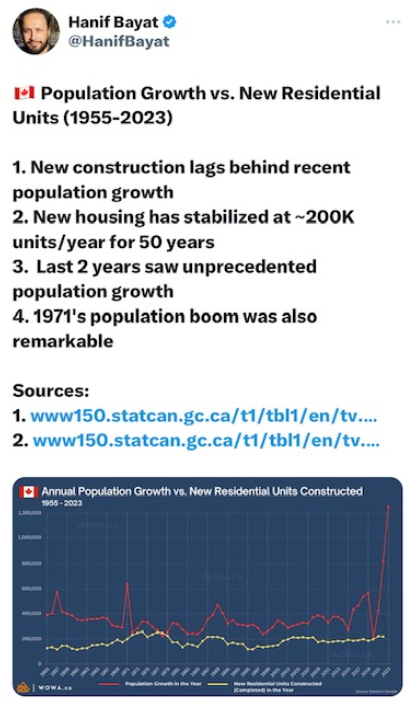
    Check out this chart:

    The red line represents population growth, while the yellow line represents new housing units.

    Essentially, the pace at which we’ve been creating new housing has not kept up with how quickly the population has been growing.

    This has been going on for quite some time, but things really got out of whack beginning in 2020, fueled by increased immigration.

    CMHC, Canada’s national housing agency, even came out and said that “almost $3.5 million new units will have to be built by the end of the decade.”

    To be fair, the private sector screaming about this for years, it’s just within the last 12 months or so, that all levels of government finally came to terms with this reality.

    So put this into perspective for a second… CMHC says we require $3.5 million new units by 2030, yet historically, on average, we only build 200k units per year.

    Even if we were to somehow double out historical output to 400k units per year for the next six years, we would still fall short by 1.1 million units (400 units x 6 years = 2,400 units).

    A keyword used by CMHC is UNITS, not HOUSES.

    And you better believe they pick and choose their words carefully when putting out these statements.

    I strongly believe that going forward, most new residential development will be in the form of multi-unit buildings.

    More specifically, high-rise buildings.

    Build UP instead of OUT… it’s really the only efficient way to address the housing shortage that has so quickly gotten out of hand.

    To localize it for you, our office is currently working on some financing for a development in the Town of LaSalle, in the Laurier Parkway area.

    They’re at the final stage of rezoning, and once finalized, there will be the ability to basically double the population of LaSalle, just in that area.

    They’re accomplishing that by allowing for high rise residential buildings, up to 12 storeys high.

    There will be very few single-family homes in this development.

    And I foresee this trend being adopted by most municipalities across the province.

    Which means over time, more and more people will live in multi-family buildings, instead of single family homes.

    And I’m not suggesting this is a bad thing… just very different from what we’ve been accustomed to here in Canada.

    And what that does this trend do for the value of a single-family home?

    My belief is that they become even more valuable and less affordable over time.


    Until next time,

    Vince
  • Systems to Navigate Interest Rates

    Systems to Navigate Interest Rates

    Back in September I wrote about my family’s wine making tradition.

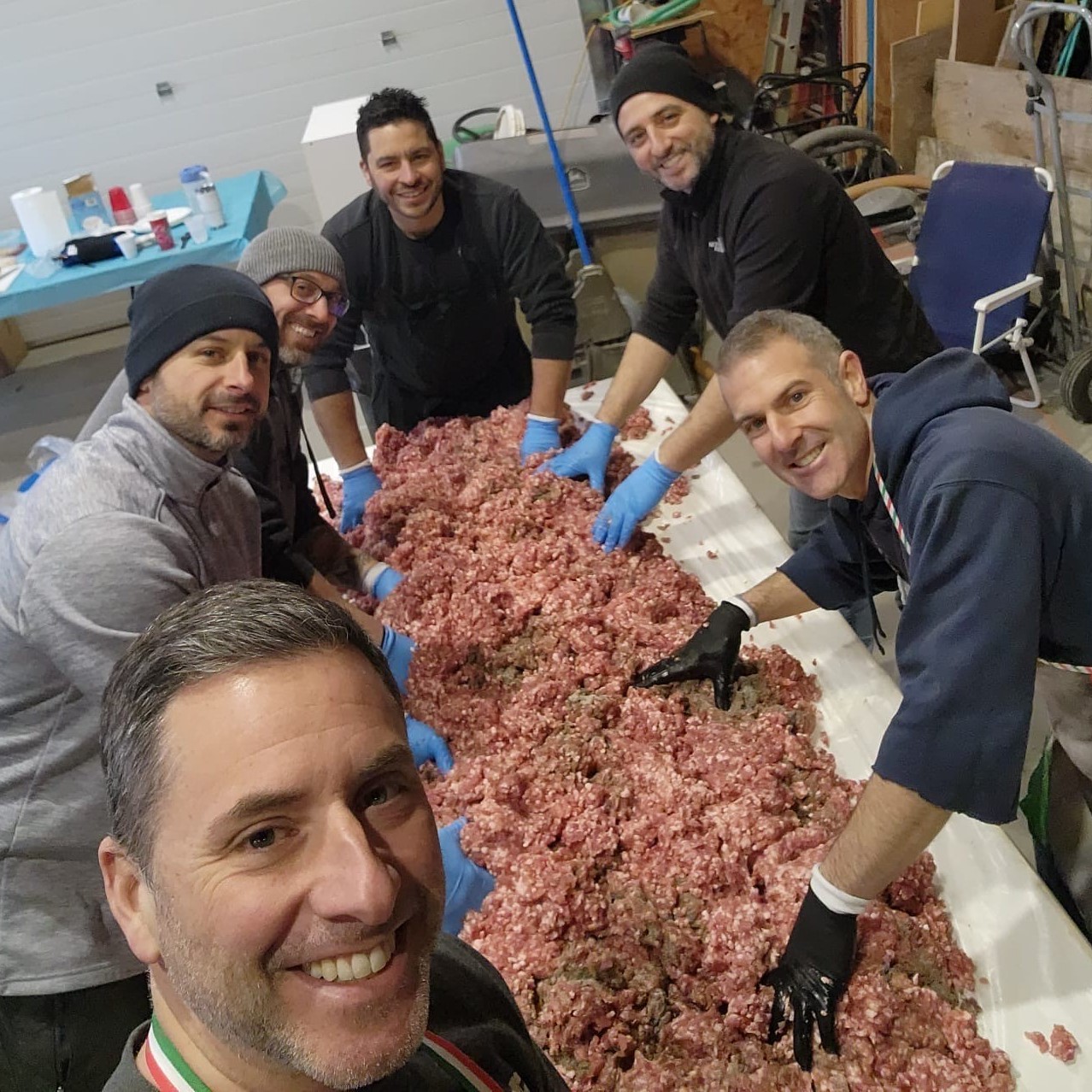
    Come January/February, another culinary tradition descends upon us — cured meats! In particular, a staple every year is our Italian Sopressata (it’s basically a salami).

    Long before the charcuterie board became a mainstream thing, our family was getting together once a year and slaving away for a whole weekend preparing these salty cured meats, and then another three months or so curing them.

    Growing up I hated this tradition. Mostly because my parents would give us very little notice.

    On a Friday morning we would be told that we would have to cancel any plans that weekend because it is “salami weekend.”

    As I got older, I started to appreciate it a bit more.

    Eventually I even started a new salami making tradition with some good buddies.

    It’s such a great day. We work hard, but we have a blast. We think that this year may have been our 10 year anniversary… but we’re not certain.

    I bring this up for a reason…

    Over the years we’ve become extremely efficient at making salami.

    Our processes versus what our parent’s would do, is much different.

    What used to take a full three-day weekend, now takes only one full day.

    Why? Because rather than just going through the motions and doing things a certain way because “that’s how it’s always been done,” we question and look for better ways to do things.

    Over the last several years, we’ve developed a system that has allowed us to save time, save money, require less physical labour, and ultimately produce (in our humble opinion) a better end product.

     A System is defined as a set of principles or procedures according to which something is done; an organized framework or method.

    Systems are important because they provide predictable results.

     No system, no predictable results.

     Speaking of predictable…

     Yesterday, the Bank of Canada held its first meeting of 2024, and as expected they announced that they would continue to HOLD rates.

     At this same meeting just twelve months ago, the Bank of Canada was in all-out rate hike mode and announced for the 8th time in a row that they would yet again be increasing rates.

    For those keeping track, the BOC has now held rates for 6 straight months, and we’ve only seen two small rate increases (25 bps each) in the last 12 months.

    The next BOC meeting is in March, and unless January and February inflation numbers come in much higher than expected, we expect much of the same at that meeting (i.e. another HOLD).

    Our view is that you will likely start hearing some language from BOC (probably starting at the March meeting), suggesting FUTURE interest rate cuts. But those interest rate cuts likely won’t happen until later in the summer or into the fall.

    What does this mean for current mortgage rates?

    Prior to this month, Canadian bond yields had been on a consistent downtrend for nearly 3 months, and fixed mortgage rates pretty much followed suit. At one point, the 5-year fixed rate got as low as 4.89%.

    That said, as Bond yields have started to increase, and so have mortgage rates. And we see this trend continuing or staying flat, until the BOC starts hinting towards rate cuts.

    If you have an upcoming mortgage renewal or plan to take out a new mortgage in the short term, we encourage you to reach out to your broker soon, to lock in a rate, to protect yourself from any potential short term rises in fixed rates.

    If your borrowing needs are further out, we still encourage you to sit down with your mortgage broker, discuss your plan and put systems in place to achieve that plan.

    With all the noise and chatter around interest rates these days, it’s easy to get caught up in the news and opinions of today, even if you are not impacted by today’s rates.

    It’s important to know your own time horizon, look at the bigger picture of what’s going on around you, and make decisions that are inline with your specific situation.

    If you need help with this… please reach out. We’re here for you.

    All the best,

    Vince

  • Are You Looking for Lions Playoff Tickets?

    Are You Looking for Lions Playoff Tickets?

    Holy Moly… what a game that was on Sunday!

    I didn’t plan to talk about football two weeks in a row… but how can I not touch on that historic Detroit Lions playoff win!

    Full disclosure… big football fan, but not a big Detroit Lions fan.

    Except for this past Sunday. I was very much rooting for the hometown team, and even more so rooting for the fans and the City of Detroit… they deserved this win. It was a long time coming.

    For those not familiar, it had been 30 years since the Lions last hosted an NFL playoff game.

     30 FRICK’N YEARS!!!

    I wasn’t at the game, or even in Detroit for that matter… but you could feel the buzz all around Windsor.

    Because it was a night game… there was this nervous excitement all day… it felt like a Super Bowl Sunday.

    Both the Lions and the game itself did not disappoint! What a fun game to watch.

    And because the Cowboys lost to the Packers, the Lions went from hosting their first playoff game in 30 years last week, to hosting a second playoff game at Ford Field, this upcoming Sunday… AMAZING!

    More on the Lions game at the end of this email…stay tuned. 😉

    But keeping with the theme of sports… we recently helped finance an 18-hole golf course located in Windsor-Essex.

    This was a refinance, which allowed our borrower to extract $4 Million in equity, from the property.

    This was part of a more involved financing package. We also helped the borrower pull out an additional $1.6 Million in equity they had in an industrial property.

    Here’s the backstory… our client was presented with an opportunity to purchase an existing well established operating business, but it was a competitive situation therefore they had to act quick, and close quickly.

    Although our client already has a good, long-standing relationship with their bank for their existing businesses… the bank just couldn’t pull this off for them. Not in the timeframe the borrower needed it done.

    Understanding our client’s full financial picture… we were able to advise them that the most efficient way to accomplish what they were looking to do was to refinance the two commercial properties mentioned above and use the equity-take-out money to close on the business purchase.

    We were able to obtain an approval for them, for short-term bridge financing, within 48 hours… and funded both deals within two weeks.

    And this just happened within the last few months… during a time when credit had tightened up, and interest rates at their peak.

    We are now working with them to put together a more comprehensive financing package, which we will take to market for them, and which will ultimately allow them to pay off the bridge loan, with cheaper, long-term conventional financing.

    The key takeaway items from this deal:

    • Financing is not rocket science, but there are many ways to “skin a cat.” We could have approached this deal a few different ways, but based on the borrower’s priorities, we were able to craft and execute a strategy that best accomplished the end goal.
    • There is so much value in working closely with your client and understanding their financial situation. Conversely, there is just as much value for the client to work with an experienced  Broker who understands their situation and has multiple lending solutions at their disposal.
    • Where there’s a will, there’s a way. Our client is a true entrepreneur and a hustler, and going off of the trust in the relationship they have with us, they made the decision to pull the trigger on his offer, despite not having the funds to do so at the time. NOTE/DISCLAIMER: We did not recommend this approach… but he ignored us and trusted we would get the job done. Thank goodness he was right! Lol

    Okay, now back to the Detroit Lions

    Are you interested in going to the game on Sunday?

    Well, here’s your chance… we are holding a draw for two free tickets (worth over $2,500) to Sunday’s game.

    Here’s what you need to do…

    Follow us on Instagram and Facebook, and follow and share our Lions tickets post, while tagging three friends. This will enter you in the draw for FREE tickets. The draw will take place on Saturday, January 20.

    Best of Luck!

    And… GOOOO LIONS!!!

    Vince

  • Michigan Football & Interest Rates

    Michigan Football & Interest Rates

    Go Blue! The College Football National Championship finally comes back to Michigan.

    And what a run it was! Undefeated season knocked off the perennial superpowers, Alabama in the playoff and won the championship game convincingly, 34-13.

    I’m not the biggest college football fan on the planet, but being a lifelong Windsorite, I’ve always had an appreciation and admiration for the history behind UofM Football.

    I think a lot of sports enthusiasts in Windsor feel the same.

    As for Coach Jim Harbaugh however (pictured above on the right), I’ve never really been fond of him.  Just something about his smug personality that I could never get past.

    But that said you got to give credit where credit is due.

    Not long after taking over the team in 2015, people were calling for his resignation. He did not meet early expectations, as fans were looking for immediate success.

    Harbaugh stayed focused, ignored the noise, recognized that the program needed to take a step back before it could take two steps forward, and eventually went on to accomplish his goal of leading UofM to a Championship.

    There’s also lots of noise in the real estate market these days.

    And it makes it difficult for anybody in real estate to play the “long game.

    Much of the noise is around interest rates.

    One day we were told they will stay low for a long time, shortly thereafter they start to increase at record pace, and now we are holding our breath waiting for rates to fall…

    And in my opinion… this will be a cycle that continues… wash, rinse, repeat.

    In an environment like this, it really makes it difficult to make any long-term decisions.

    My approach is to try and understand all of the fundamentals at play (interest rates are just one of several factors that impact real estate), make a long-term game plan based on all of those factors, and then try remaining nimble and agile in order to deal with all of the shorter term challenges and decisions that you will be faced with.

    These days, interest rates are one of those shorter-term challenges I am referring to.

    Gone are the days when you can just seek out the best 5 year rate, set it and forget it.

    Depending on your personal situation, and your future outlook on interest rates, a very good case can be made for almost any length of term, or even an open variable rate mortgage.

    Currently, a shorter-term mortgage rate is higher than a longer-term mortgage rate (i.e. the 2 year rate is more expensive than the 5 year rate).

    This is called an inverted yield curve and is not typical. Usually the longer term is more expensive than the shorter term (i.e. the 2 year rate is cheaper than the 5 year rate).

    Why is it currently inverted?

    The oversimplified explanation… the market is betting that interest rates will soon go down, and the common play is to only commit to a short-term interest rate now, because you can lock into a longer term later, at a lower rate.

    And who is the “the market” that is making this bet?

    Again, the oversimplified explanation – these are the people that buy and sell government bonds, which ultimately establishes government bond yields.

    What’s a  government bond yield?

    The government issues bonds and offers a rate of return to whoever buys those bonds. The yield is the rate of return (i.e. the interest rate you get in return for buying that bond).

    It’s important to understand bond yields, and where they are trending, because this is one of the key factors that Canadian banks use to set their long-term mortgage rates.

    This is the factor that I focus on most heavily when faced with having to make an interest rate decision, today.

    There are certainly other factors that influence mortgage rates:

    • Bank of Canada’s Policy Interest Rates
    • Economic Conditions
    • Cost of funds (i.e. what interest rate they are paying for the funds that they are lending out)
    • Competitive Landscape – what rates are other lenders offering
    • Credit Risk – Individual borrowers’ creditworthiness plays a crucial role in determining mortgage rates. Banks assess the risk associated with lending to a particular borrower, and those with stronger credit profiles may be offered lower rates.
    • Profit Margin – Lenders are in the business of making a profit, and they factor in a margin above their cost of funds to cover operating expenses and generate income.

    In the end, it’s a shame that we are in an economic environment where things are so volatile, whereby you need to study and understand silly things like government bond yields, however, such is the real estate game these days.

    And we at UCC are here to help you should you need us.

    So if you want to have an exhilarating conversation about the inverted yield curve… just give us a call! 😊

    Until next time,

    Vince

  • What Are Your Goals for 2034?

    What Are Your Goals for 2034?

    Happy New Year All!

    Welcome 2024!

    Hope everyone enjoyed their holidays. I sure did!

    I set out to have a quiet and relaxing holiday, and for the most part, mission accomplished.

    So much so, that I even forgot to snap some pics to share in this newsletter.

    But if I had, it would have been of the five of us all sitting on one couch and playing a Luigi’s Mansion on Nintendo Switch, way past the kid’s bedtime… good times!

    Pretty sure if you ask my kids, they will tell you that the Nintendo was more of a gift for mom and dad then it was for them lol.

    I’m a fan of regularly updating your goals, but there’s something magical about the fresh start of a new year.

    I also like to take this time to reflect on the previous year, and what I was able to accomplish.

    2023 was a big year for me and my family…

    • My wife and I both turned the Big 4-0
    • We built and moved into our dream home.
    • I left my corporate job to own and operate UCC.

    Both the house and UCC are a direct result of setting goals and putting systems in place to achieve those goals.

    And these were not goals that I set in 2022 (the previous year).  These were goals set in place long before.

    My goal wasn’t necessarily to own a mortgage business.

    But I did have a goal to escape the corporate world and be in business for myself.

    Truthfully, this had been a goal for many years prior to actually “pulling the trigger.”

    It hit me some time in my early 30’s. Although up to that point, I had been enjoying my corporate career, and doing very well in it…

    …when I extrapolated my life forward 10, 20 years… I didn’t like what I saw for myself.

    I saw a life of reporting to someone else, always asking permission to spend extra time with my family, working a job where I could be “outsourced” or replaced quite easily, a lot of stress and no personal freedom.

    I saw a 50-year-old who may have become dependent on “the system.”

    A 50-year-old who wouldn’t have an asset base to have personal freedom, and a 50-year-old who wouldn’t be able to live his own life as he pleased.

    A 50-year-old who couldn’t spend much time with his family… to me this would be an absolutely unacceptable way to live.

    So that’s when I decided to put systems in place for myself that would eventually produce for me the lifestyle that I was looking for.

    And the system I put in place for myself was quite simple… acquire assets.

    First, I focused on generating passive income… naturally this led me to rental properties.

    The approach that I took was to purchase vacant building lots and construct my own rental properties.  People these days are calling this the “build-to-rent strategy.”

    Rental properties allowed me to feel confident about my future.  They didn’t necessarily allow me “today freedom”, but I knew they would provide me “tomorrow freedom.”

    Next, I focused on business assets. Assets that would generate sufficient income today.

    In addition to a few other businesses that I am partnered in, this is what led me to UCC.

    Why do I bring this up?

    Every new year I see tons of people setting out new goals for the year.

    New dreams, new ideas, new plans…all get mapped out for that year.

    My advice on this would be: STOP IT.

    Forget this year.

    What do you want your life to look like in 2034? What about 2044?

    Where do you want to be living?

    What do you want to be doing?

    What does your daily life look like in 2034 and in 2044?

    Are you running the systems today that will produce that result for you?

    What systems are you running for yourself? Have you really thought about them?

    Where will your current life systems lead you in 10 and 20 years?

    If you want to have a great 2034, it’s best to start planning for it today.

    Choose, very consciously and deliberately, the life systems you are running.

    As masses run around reading headlines, freaking out about the latest financial news, or just running in circles, you can have a plan.

    And having that longer term plan gives you peace of mind.

    So if you want to live your best life, it’s best to start focusing on the long-term right now.

    1. Extrapolate forward
    2. Choose what life systems you want to run for yourself

    If one of those systems happens to be building an asset base of real estate or even passively investing in real estate by way of private mortgages, then we would be more than happy to sit down with you and discuss ways that we can help you achieve your goals.

    Maybe this is the year we’ll begin working together to make 2034 and 2044 the best New Year of your life.

    Happy New Year, everyone!!

    Vince

  • Food, Paint & Christmas Cheer

    Food, Paint & Christmas Cheer

    The UCC team recently celebrated Christmas with a fantastic meal at the recently re-opened Milos Greek Grill, in Walkerville, followed by a Paint Party led by the very talented Julie Robinson.

    I had never been to a paint party. I don’t have an artistic bone in my body.

    Andrea, on the other hand, she’s been to 40+ parties (for real!)… and it shows.

    Check out her painting compared to mine… it’s pretty comical. So is my apron… smh!

    But at least I didn’t get the award for ugliest picture… those honours went to John. 😊

    Let’s just say that the Milos waitress (who was also the judge) received a very good tip. 😉

    If I am being honest… I wasn’t overly excited about the Paint Party, but I had a blast. And so did everybody else. I highly recommend, regardless of artistic abilities.

    It’s crazy to think that another year has come and gone.


    This has been a very eventful year for me. New business, new house and many new challenges faced along the way.

    As I reflect on 2023, it seemed to fly by, yet so much happened!

    It’s not until I paused to write this email, that I realized that many of my long-term goals were achieved this past year. Yet, I’ve never really stopped to celebrate them.

    My goal for this Christmas season is to slow down, enjoy my family and friends and express gratitude for all that I have and all that I’ve accomplished in 2023.

    I also hope to spend some time to reflect on the goals that I have not yet achieved, and my priorities for 2024.

    In these emails I am often pointing out all that is bad in the economy, politics etc. But in reality, as a whole, we have it pretty darn good! And it’s important to recognize and be grateful for that.

    This holiday season, take time to be with those you love and focus on all that is good. That’s what I will be doing.

    From all of us here at UCC, we wish all of you the best holiday season.

    Merry Christmas & Happy New Year!

    See you in 2024!

    Vince

  • Interest Rates — Next Stop Down… Then Up Again

    Interest Rates — Next Stop Down… Then Up Again

    Check out this new hoodie! I am very grateful for all my clients, but Ernie, Mike and Mary at DC Farms will always hold a special place in my heart.

    They were one of my very first greenhouse clients. When they came to see me, they were in a bit of a jam, and we were able to do some restructuring to help them out.

    I was just doing my job… but 12 years later and still, every chance they get, they express their sincere gratitude for the help.

    Such great people! And a great business too! I’m very excited to watch this business grow and be part of the team to help make it happen.

    For those that only know me through UCC, you may not know this, but I’m not a typical mortgage agent.  Truthfully, until recently, I never wrote a single residential mortgage…

    I started my career as a CPA and worked in Commercial Banking for the last 15 years or so.

    For those paying attention, you may have noticed that in addition to residential mortgages, UCC is doing a lot of commercial and agricultural lending these days.

    Earlier this week I spent a full day in Leamington-Kingsville, visiting some of greenhouse clients.

    Most people don’t realize this, but a modern greenhouse today, is basically a high-tech manufacturing facility made of glass. The cost of construction is in excess of $1 million per acre… and very rarely do you see anybody build less than 10 acres.

    Why do I bring this up? Because as you can imagine, just like residential or commercial real estate, greenhouses are very much interest rate sensitive.

    When rates were low… greenhouse values skyrocketed, and new construction was on fire. The industry was in all-out growth mode… as rates increased, expansions and re-sale came to a grinding halt.

    Sound familiar?  Basically, it’s the same story as what’s been going on in the residential market.

    It’s not only the residential and investment real estate markets that have been impacted by the current interest rate environment.

    Other important industries… ones that employ lots of people, produce products that are considered a necessity, export to other countries. These industries have been impacted as well.

    The greenhouse farmers want to build more greenhouses. They want to grow more produce. There is a market for it.

    But at current interest rates, it just doesn’t make economic sense for them to do so. Truthfully, for those that are highly leveraged, it almost doesn’t make sense even to continue to operate what they already have.

    When increasing interest rates, the intent was to slow economic activity. In my “boots on the ground” opinion, mission accomplished. Economic activity has slowed.

    And I’m sure the experts see this as well.

    But their fear is that if they start to bring rates down too soon and too fast, then all that work to slow down the economy (and more specifically, inflation) will be erased.

    So now begins the balancing act. We’ve more than likely seen the end to interest rate hikes (at least, for now), but when do they start to cut? And how quickly do they cut?

    I can tell you this… just like the real estate industry, greenhouse farmers are ready to get going… as soon as rates come down, greenhouses will be going up… literally, lots of farmers have building permits in hand and will start building as soon as it makes sense to do so.

    My gut feeling is that this current world of volatile interest rates, is not going away.

    Although the next direction of rates is likely downwards, that does not mean they won’t go back up shortly thereafter.

    This is just a game that we are going to have to get used to and navigate accordingly.

    If you need help navigating this crazy interest rate environment… give us a call… we are here to help!

    All the best,
    Vince

  • Why is Everything Getting So Expensive

    Why is Everything Getting So Expensive

    This is a trench that my dad and I recently hand dug in my parent’s backyard.

    It was to address a small drainage issue they were having.

    This is my dad inspecting my work… he’s not overly impressed, lol.

    My father is 73 years old, and he basically dug most of the trench on his own.

    He is a workhorse!

    I very much envy is work ethic, and whenever I find myself getting lazy, I think of how hard my parents have worked over the years to provide for their family.

    My dad didn’t even ask for help with this project…

    I just happened to call my mom on the way into work, and she told me what my dad was up to…

    I immediately changed my plans for the day and decided to give him a hand.

    As I was helping him, I couldn’t help but feel grateful for being able to so quickly change my plans that morning.

    When I reflect on the pros and cons of transitioning from an employee in the corporate world to being self-employed….

    …the ability to have full control over my own day, is far and away the greatest benefit to being my own boss.

    That said, I recognize that most do not have this same control over their day (that was me not long ago).

    And between work, family, and everything else… there is very little time for anything.

    So it’s not at all surprising that people have been completely caught off guard by the run up in prices of nearly everything in their lives…

    And most have no idea why the prices keep climbing.

    The reality is that it’s not that THINGS are going up in value, but rather the dollars that we use to purchase those THINGS, is actually going down in value.

    As governments create more new dollars to put into the system, this reduces the value of the existing dollars already in the system.

    To help you visualize it, picture this… you walk up to a fruit stand to purchase a watermelon that is selling for $2.50.

    You really want a watermelon and are willing to spend all the change in your pockets to purchase it.

    You have only $2 in your pocket.

    You offer the seller $2, and they accept.

    Therefore, at that point in time, the watermelon is worth $2.

    Now ask yourself this… What if you had $2.50 in your pocket…

    … is there a good chance that you would be willing to part with the full $2.50, to get yourself a watermelon?

    The answer is likely, yes.

    Therefore, did the watermelon go up in value or was there just more available money to purchase that exact same watermelon?

    In the end were you any further ahead having $2.50 in your pocket when you walked up to that fruit stand versus if you had only $2?

    The answer to both those questions is no.

    Now what happens if two people walk up to the fruit stand wanting to buy the watermelon, one with $2 in their pockets and another with $2.50?

    In this case, the $2 no longer buys you a watermelon, and now an individual with only $2, is officially in a worse position.

    This is a very basic example of a way more complicated money problem.

    Most of us don’t have the time to try to understand this problem.

    Nor should we have to.

    But this problem is precisely why everything seems to be getting more expensive, and why those who do not own hard assets, or are not seeing their incomes rise, continue to feel like they are falling behind.

    More than ever, I think it’s important that everyone understands the current money game at even its most basic level.

    By no means am I an expert, but by way of these emails, I hope to at least shed some light on what I think is going on in the financial system.

    Hopefully, some will find this helpful.

    Until next time…

    – Vince

  • Here’s What it’s Going to Take for Housing Prices to Go Down

    Here’s What it’s Going to Take for Housing Prices to Go Down

    This is Bill, “the handyman.”

    Bill owns a handyman service called Rent-A-Friend.

    Gotta love that name!

    Bill is our go to guy in the UCC office when anything needs fix’n.

    More importantly — Bill is a great guy!

    When I took over UCC a year or so ago, our office décor was straight out of the 70’s.

    It was hideous!

    So Bill has spent a lot of time at the office over the last year, assisting with some remodeling.

    During my most recent chat with Bill, he mentioned that business was slow.

    I jokingly said to him “time to reduce your prices”.

    His response: “Go to he!! — I can’t afford to do that.”

    For the record, Bill’s prices are extremely reasonable, and I wouldn’t expect him to reduce his prices.

    But his comments stuck with me, and you’ll see why shortly…

    This past weekend I had dinner with a client of mine — a condo developer.

    As expected, conversations eventually led to real estate.

    And specifically, where will prices go in Southwestern Ontario.

    His opinion was this — we can all agree that there is a supply imbalance that is only getting worse (i.e. There are more people that need houses, than there are houses).

    And because of the current interest rate environment, those that build/develop housing units (i.e. His company), are not doing so because it is too expensive to do so.

    Developers will only start to consider new development when the profit margins begin to make sense again (i.e. When they think they can actually sell units for a profit).

    And this will only happen is one of two scenarios come to fruition:

    1) cost of development comes way down (i.e. Framers, plumbers, electricians etc. all significantly reduce their prices) or

    2) they can sell units at today’s housing prices or greater.

    This brings me back to Bill’s comment earlier — no chance construction trades bring down their costs in any meaningful way.

    Why?

    Because they can’t.

    Just like everybody else, their expenses have gone way up too.

    So that rules out option #1.

    That leaves us with option #2 — Developers will need to sell houses at today’s prices or greater.

    To accomplish this, requires buyers being able to afford housing at today’s prices, or higher future prices.

    And this is where things begin to get political, and when things get political, they usually don’t make sense.

    Will interest rates start to go down in a meaningful way?

    Will developers be provided with large incentives to start building?

    Will mortgage amortizations increase to 40 years?

    Or will it be something else?

    Who knows what it will be… but my bet is that whatever the political response is, it will likely result in long-term real estate prices going up, not down.

    Until next time.

    All the best,
    Vince

  • Take Advantage of Your Current Rate

    Take Advantage of Your Current Rate

    This past weekend, my family finally moved into our new home.

    This is the kids enjoying their first meal in the new house, while Jackie and I attempted to unpack the endless number of boxes.

    Yep, no kitchen table, and a bucket of fried chicken… no parent of the year award for us anytime soon, lol.

    The house we moved from was our family home nearly twelve years.  All three of our children were born in that home.

    It was a bit emotional for both Jackie and I, and we thought it might be for the kids too… but it’s amazing how adaptable they are.

    They did not skip a beat. They are loving the unfurnished home.

    My two daughters are using the wide-open family room area to practice their gymnastics routines, while my son is doing a great job breaking in our new hardwood floors with his Hot Wheels.

    We are often so consumed by the financialization or real estate, we lose sight of it’s real purpose… to provide shelter and comfort to real people.

    Speaking of comfort… many homeowners with a mortgage are uncomfortable about their future mortgage renewals. And I can’t blame them, given how much rates have risen over the last 18 months.

    To put it into perspective, in January 2022, RBC’s 5-year posted mortgage rate was 2.34%.

    Today, it’s 6.50%.

    On a $500,000 mortgage, that is a monthly payment difference of $2,200 vs $3,375. Yikes!

    Nobody has a crystal ball that will tell us where rates will be when it comes time to renew, but my guess is that they will be higher than January 2022.

    Here’s a quote from a Financial Post article last week, with their comments about future interest rates:

    Senior deputy governor Carolyn Rogers said households and businesses in Canada should ready themselves for an era of borrowing costs higher than over the past 15 years, given the run-up in interest rates since the middle of 2021.

    “It’s not hard to see a world where interest rate are persistently higher than what people have grown used to,” Rogers said in prepared remarks in Vancouver.

    So if you are currently enjoying a lower interest rate, my advice is to try to maximize the benefit of that rate before the renewal date.

    Here are some simple strategies for you…

    1. Maintain Your Current Payment Level: Plan ahead and try to engineer your budget so that you can continue to make payments at the same level you were making when interest rates were lower. This will result in more money going towards principal, helping you pay off your mortgage faster.
    2. Make Lump-Sum Payments: Whenever possible, make lump sum payments towards your mortgage principal. This could include using tax refunds, work bonuses or any other unexpected income.
    3. Accelerate Your Payment Frequency: Even if interest rates have increased, consider switching to bi-weekly payments if your lender allows it. This can result in extra payment each year and help you pay off your mortgage faster. Sometimes 7 years quicker than your planned amortization period and you could save thousands of dollars.
    4. Create a Dedicated Mortgage Payoff Fund: Open a separate savings account and contribute regularly to create a fund specifically for making extra mortgage payments. When you accumulate a significant amount, apply it towards the principal.
    5. Consider a Partial Mortgage Payment: Some lenders allow you to make partial pre-prepayments without penalties. Check with your mortgage agent or lender to see if you can make additionally payments towards the principal without any adverse consequences.
    6. Cut Discretionary Expenses: Re-evaluate your budget to identify areas where you can cut discretionary spending. Allocate the savings towards your mortgage payments.
    7.  Invest Windfalls Wisely: If you receive unexpected windfalls, such as an inheritance or large gift, consider using a portion of it to pay down your mortgage principal.
    8. Review & Adjust Your Budget Regularly: Periodically review your budget to identify areas where you can trim expenses or reallocate funds towards your mortgage. Adjust strategies as needed based on changes in your financial situation.
    9. Explore Debt Consolidation: If you have high interest debts, consider consolidating them into a lower interest  loan. Use the money saved to make extra mortgage payments.
    10. Refinance Strategically: While overall interest rates may have risen, there might be specific mortgage products or terms that could still offer you a lower rate. Explore your options to see if refinancing to a different type of mortgage makes sense for your situation.

    The idea is that you pay less interest and keep more of your hard earned money for yourself and your family.

    Maybe even invest your money into hard assets like real estate that can help protect it’s worth against inflation.

    Our team would be more than happy to help you review your personal financial situation to determine if you can take advantage of these strategies.

    Feel free to either respond to this email or call us at 519-255-9505 to speak with the team.

    All the best,
    Vince