Tag: TDS

  • Is Your Credit Score Good Enough to Buy a Home?

    Is Your Credit Score Good Enough to Buy a Home?

    Three little digits can make a big difference when you’re trying to get a mortgage you can afford.  Whether you can land a mortgage with a low interest rate or even get any home loan at all often comes down to three little digits: your credit score.  Does your credit score need some help? And could it keep you from buying a home? Let’s find out.

    How do credit scores work?

    Canada has two main credit bureaus — Equifax and TransUnion — that collect and share data about how you’ve used credit in the country.  These private companies draw up credit reports that summarize your activity and use it to assign you a credit score.  Lenders like banks rely on your credit score to tell if you’re a good investment.

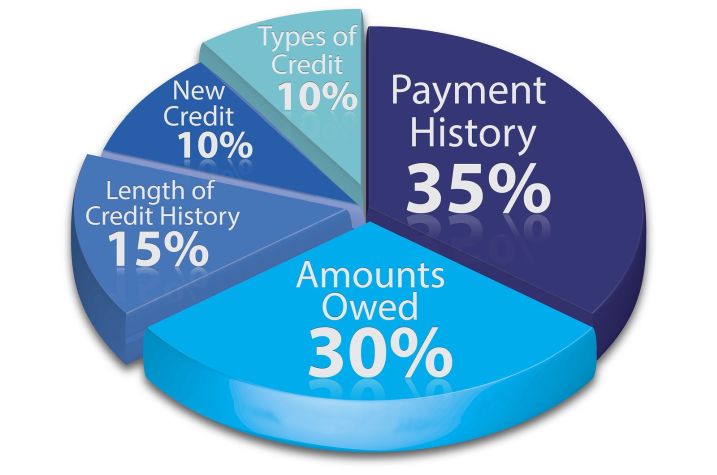
    Credit bureaus assess a lot of information in their reports, such as:

    • How long you’ve had a credit card
    • Whether you miss payments
    • Whether you stay close to your credit limit
    • The number of times you apply for credit
    • The size of any outstanding debts

    Credit scores range from 300 to 900 and they play a big part in being approved for a mortgage.  A higher score means you’re managing your credit well and making payments on time.  A lender will be more likely to let you borrow their money.  A low score suggests you’re a risk, so you could be refused outright.

    When your credit score is decent but not spectacular, a lender will compensate for that risk by saddling you with a higher mortgage rate.  A higher interest rate means a higher monthly payment and steeper total interest charges over the life of the loan.

    How do I know if my score is too low?

    Plenty of third-party services and a few banks will give you a free look at your credit score online.  Other companies will ask you to sign up for a paid service that may have other benefits, like credit monitoring and support.  According to Equifax, most lenders smile when they see a score of 660 or higher.  Anything above 760 is excellent. Anyone with a score below 560 will struggle to get a decent interest rate and may not get a loan at all.

    Each lender has different standards, and those standards can change depending on what’s happening in the mortgage market.  Some private lenders won’t be as demanding as major banks but may offer far worse deals to compensate. These “subprime” lenders work almost exclusively with people who have low credit scores.

    If your credit score needs work, you’ll want to carefully consider whether the cost of a higher interest rate is worth it. You may decide it’s better to delay your home purchase to give yourself time to improve your score.

    How do I raise my score?

    The easiest way to bring up your credit score quickly and snag that mortgage is to obtain copies of your credit reports from the major credit bureaus and make sure everything on them is accurate.  Canadians are entitled to a free look at their credit report at least once per year from both Equifax and TransUnion.  If you find any mistakes, dispute the errors so they can be removed.

    Paying bills on time, even if it’s just the minimum payment, is one of the most important factors.  Contact your lender right away if you fear you might miss a payment, and don’t skip a payment even if it’s in dispute.

    Try not to use too much of your available credit.  The federal government suggests using a third or less of what you could be using, even if you always pay off the balance.  Paying down your credit cards to cut your credit utilization can give your credit score a nice boost.

    Another option is to enroll the help of a free credit monitoring service. You’ll get instant access to your score and be able to check your credit history regularly.  You have a few other options — like using different types of credit rather than just credit cards, keeping old accounts active and trying to limit the number of credit checks — but these basic steps will put you well on your way to home ownership.

  • What Does ‘Pre-Approval’ Mean?

    What Does ‘Pre-Approval’ Mean?

    Getting pre-approved by a lender makes it easier for buyers to find the home they want within their price range. However, it does not guarantee you’ll get the mortgage. It is simply a certificate saying that through a quick calculation of your finances, the lender has determined what you can afford.

    During the pre-approval, the lender will also fix the interest rate, which is usually good for between 60 and 90 days. If a better rate promotion occurs during the buyer’s fixed period, the buyer is usually eligible for that as well. It is likely the pre-approval will lead to a mortgage, but there have been situations when this has not been the case. The best way for buyers to ensure success is to understand what the lenders look for and to be prepared. Another way is for buyers to work with their mortgage broker, who can flag any potential challenges.

    A lender will determine a buyer’s debt load by calculating the Gross Debt Service (GDS) Ratio and Total Debt Service (TDS) Ratio. The GDS Ratio is the proposed housing costs, including mortgage payments, taxes, heating costs and 50% of condo fees, if applicable, and shouldn’t be more than 32% of the buyer’s gross monthly income. TDS calculations take into account all the buyer’s other debt obligations and shouldn’t be higher than 40%.

    Once a buyer has made a conditional offer on a home, the lender will gather all the documentation required to approve the mortgage, including a credit report. Other items a lender will need are a letter from an employer confirming the buyer’s salary, information about other sources of income, bank accounts, loans and other debts, proof of financial assets, sources of the down payment and deposit, and proof that the buyer has the funds for closing costs.

    Problems can crop up during the mortgage approval process. For example, the buyer’s credit score may be too low, the buyer might not have the right source for the deposit funds or the closing costs may not have been deposited in an account. The buyer’s GDS and TDS ratios might also be too high.

  • Understanding GDS & TDS: What Can You Afford?

    Understanding GDS & TDS: What Can You Afford?

    When shopping around for a mortgage, there’s more to think about than simply finding the best mortgage rates. It’s important to also consider the terms and conditions of your mortgage, the size of your down payment, and whether or not you can afford the home (and monthly mortgage payments) you’re considering.

    While there are handy tools like a mortgage affordability calculator to help you figure out what you can afford, it’s a good idea to understand how lenders calculate your affordability and the formulas they use to do so.

    There are two standard measures of affordability lenders use to determine how much they’ll lend you. First, your Gross Debt Service Ratio (GDS) is calculated. This is the percentage of your income needed to pay all monthly housing costs: your mortgage, property taxes, heat, and 50% of your condo fees (if applicable). The industry standard for GDS is 32%, meaning you typically need a GDS lower than 32% to qualify for a mortgage.

    Calculating your GDS

    GDS = (Principal + Interest + Property Taxes + Heating + ½ Condo Fees) / Gross Income x 100

    Next, a lender will calculate your Total Debt Service Ratio (TDS), which is similar to a GDS but also takes into account your other monthly debts, like credit card payments, car payments, alimony, and loans. The industry standard for TDS is slightly higher than GDS at 40-42%.

    Calculating your TDS

    TDS = (Principal + Interest + Property Taxes + Heating + ½ Condo Fees) + Other Debts) / Gross Income x 100