Tag: mortgages

  • Unlocking Mortgage Mysteries: 5 Things You May Not Know

    Unlocking Mortgage Mysteries: 5 Things You May Not Know

    Securing a mortgage is a significant milestone for many Canadians, whether it’s for purchasing a dream home, investing in real estate, or refinancing an existing property. While mortgages are familiar territory for most, there are several lesser-known aspects that can impact your financial decisions. In this article, we’ll uncover five key insights that might surprise you about mortgages.

    1. Mortgage Penalties: When obtaining a mortgage, borrowers typically focus on the interest rate, term, and monthly payments. However, it’s crucial to be aware of potential mortgage penalties. If you break or alter the terms of your mortgage agreement prematurely, lenders may charge penalties. These penalties can be substantial and vary depending on the mortgage type and the lender’s specific terms. It’s essential to carefully read and understand the fine print before committing to a mortgage to avoid any unpleasant surprises down the road.

    2. Mortgage Prepayment Options: Most Canadians are aware of the importance of paying down their mortgage faster to save on interest payments. However, not everyone realizes the different prepayment options available. Many mortgage products in Canada offer prepayment privileges that allow borrowers to make additional lump-sum payments or increase their regular payments. Taking advantage of these prepayment options can help you save thousands of dollars in interest over the life of your mortgage.

    3. Mortgage Portability: Life is unpredictable, and sometimes circumstances may require you to move before your mortgage term expires. In such situations, mortgage portability can be a valuable feature. Porting your mortgage allows you to transfer your existing mortgage to a new property without incurring penalties. While not all mortgages are portable, understanding this option can provide you with flexibility and potentially save you money when you decide to relocate.

    4. Mortgage Stress Test: To ensure financial stability and protect borrowers, the Canadian Government implemented a mortgage stress test in 2018. This test assesses a borrower’s ability to make mortgage payments at a higher interest rate than the one they’re applying for. It ensures that borrowers can afford their mortgage even if interest rates rise in the future. While the stress test may limit your borrowing capacity, it promotes responsible lending practices and safeguards against excessive debt.

    5. Mortgage Brokers:
    When searching for a mortgage, many Canadians turn to their local bank as their primary source. However, working with a Mortgage Broker can offer several advantages. Mortgage Brokers are licensed professionals who have access to a wide range of lenders, including major banks, credit unions, and alternative lenders. They can help you navigate the complex mortgage market, compare various options, negotiate on your behalf, and potentially secure more favorable terms.

    Understanding the nuances of mortgages is essential for making informed decisions and ensuring a smooth homebuying experience. By delving deeper into the lesser-known aspects of the mortgage world, you can better navigate the complexities and potentially save money in the process. From being aware of potential penalties and prepayment options to understanding mortgage portability, stress tests, and the benefits of working with a Mortgage Broker, these insights will empower you to make sound financial choices on your mortgage journey.

  • What You Need to Know About Alternative Lenders

    What You Need to Know About Alternative Lenders

    Applying for a mortgage can be a nerve-racking experience when you are unsure you will be able to qualify. If you apply at any of the big banks, you will be forced to meet some pretty strict criteria to qualify. While banks have the right to choose who they do and do not lend to, having your mortgage application denied can be a disheartening experience. Some people may not even try to get a mortgage at all if they know they won’t meet the criteria.

    Despite the fact that the big banks represent the largest volume of mortgage lending in Canada, they are far from your only option. If you have been denied a mortgage from one of Canada’s major lenders or are simply looking for different options, there are many other lenders who may be willing to work with you.

    These alternative lenders offer many of the same products as a major lender but with a few differences. Though they are a valid option to pursue when buying a home, it is crucial that you understand what makes these alternative lenders different from the major lenders before you borrow for a mortgage.

    What are alternative mortgage lenders?
    ‘Alternative mortgage lender’ is a general term for a range of different groups that provide loans for home buyers. A majority of Canadian mortgages are borrowed from the Big 5 banks. These banks offer some of the best mortgage options but are very strict about who they will approve, and they are highly regulated by government policy. Alternative lenders, on the other hand, have more flexibility on what kind of terms they offer. They also often have different criteria when it comes to approving mortgages. Alternative lenders may include smaller banks, credit unions, B-lenders, and private mortgage lenders.

    Each different type of lender in the Canadian mortgage industry operates slightly differently, but they all provide mortgage lending in some form or another. Because mortgage lenders may take on riskier borrowers, they need to cover their risk somehow, and the result is often marginally higher interest rates. However, the difference can be relatively minor to a borrower, especially when it comes down to getting a home or not. In other cases, alternative lenders may be able to offer somewhat lower rates than a bank mortgage.

    Just because mortgage lenders aren’t one of the big banks, this doesn’t make them any less a legitimate source of financing. The most popular alternative mortgage lenders are highly reputable companies with whom thousands of Canadians get mortgages every year. As being qualified at a major lender becomes more difficult, many Canadians are looking to alternative mortgage lenders to fund their home purchases.

    Why should I choose an alternative lender?
    There are a few reasons why people choose to go with alternative mortgage lenders. The most common is that they are unable to meet the high criteria that major banks have in place. This could be due to high debt, low income, a damaged credit score, or something else.

    This can also be helpful for people who have unstable or alternative income sources such as rental income or income from being self-employed. Even if you have the money to afford the monthly payments on your loan, the big banks may still reject you on other grounds.

    For example, the major banks must follow the mortgage stress test when approving mortgages. The stress test tests your ability to pay at a much higher interest rate— 5.25% or 2% higher than the rate you are signing on, whichever is higher. Some alternative lenders, on the other hand, do not need to follow this test, which may be a good option if you could not pass at a bank.

    Alternative mortgages can also come in handy if you already have a mortgage with a major lender, but your financial situation has changed since your term started, and you are now at risk of being denied a renewal. In this case, you might want to consider renewing or refinancing with an alternative lender.

    Alternative lenders also offer much more flexible terms that A-lenders may be less likely to offer. This may include short or long amortization periods, low down payments, and more.

    Technically you can put yourself at risk by applying for a mortgage with less strict criteria, but you have a lot more agency in making that call rather than having a bank make the call for you. This doesn’t mean that alternative lenders will approve just anyone. However, even an alternative lender will reject your application if your financial state is truly poor.

    What kinds of mortgages do alternative mortgage lenders offer?
    Like with a major lender, alternative lenders offer a few different mortgage products, and each has its own use for a borrower. These include the standard options you would expect from any bank, such as a traditional mortgage, a home equity loan, a HELOC, a second mortgage, or a refinance. Other options for alternative lending may include:

    Bridge Loans – A bridge loan is a short-term loan that is intended to tide over a period of time. For example, you might use a bridge loan to cover a down payment before your previous home sells or improve your financial status to be approved for a full mortgage.

    Rent to Own – In a rent-to-own plan, you rent from a property owner at an increased rate, with the extra money going towards a down payment. Eventually, once you have saved enough through renting, you can use the down payment money and convert it to a standard mortgage.

    Seller Financing – Seller financing is essentially borrowing money from the seller to buy their home, which is then paid back over time. This may also be known as a vendor-take-back. Because you aren’t dealing with a financial institution, these loans can be very flexible if you can negotiate, but it can also be hard to find a willing lender.

    Reverse Mortgage – Rather than making monthly mortgage payments to a bank, the bank pays a homeowner regular payments against their home equity in a reverse mortgage. At the end of a reverse mortgage, the loan is usually paid back with proceeds from selling the home. These loans are only offered to people above 55 and are intended to serve as income during retirement years.

    Construction Loans – Construction loans are used to fund the cost of building a new home. Once the house is completed, the loan can be paid back or rolled over into a regular mortgage.

    Types of Alternative Lenders Compared
    There is not a single kind of alternative mortgage lender. Rather there are various types of businesses that each have their own business structures, products offered, and regulations they follow. Here are some of the most common types of alternative lenders.

    Credit Unions – A credit union operates a lot like a standard bank, offering bank accounts and financing, among other services, but with a different ownership structure. Credit unions are considered not-for-profit businesses that provide financial services to their members. To become a member, you are often required to own shares in the credit union, which can cost around $100. Interest rates on credit union mortgages are often comparable and, at times, better than rates at big banks. Credit unions are one of the most popular alternative lenders in Canada.

    Monoline Lenders – A monoline lender is a financial institution that offers only a single type of lending in the form of mortgages. Monoline lenders usually don’t have any physical locations and instead are contacted through the phone or internet. Monoline lenders can offer mortgage rates that are fairly comparable to major banks but may have different terms, fees, and penalties.

    B-Lenders – B-Lenders are a type of mortgage lender that don’t follow the same strict regulations as the big banks and, as a result, can lend with different qualifying criteria. Often the cost of having lower qualifying standards is a higher interest rate.

    Private Lenders – Private lenders are the least regulated of all lenders in Canada and cover a wide range of entities, from private mortgage companies to wealthy individuals who want to loan their money out. Because they don’t need to follow regulated mortgage rules, the terms on mortgage loans offered by private lenders can vary greatly and, in many cases, will be highly negotiable. Though these lenders can offer some flexibility, they can also offer a worse deal than larger banks as they have to cover their risk.


  • Fixed Rate vs Variable Rate Mortgages: Which Should You Choose?

    Fixed Rate vs Variable Rate Mortgages: Which Should You Choose?

    One of the biggest decisions you’ll face when getting a mortgage is whether to choose a fixed or variable rate mortgage. At the moment, it’s hard to go wrong with either one. After all, mortgage rates in Canada are at historic lows. But the type of mortgage rate you choose is something you should spend some time considering, as the best choice depends as much on your individual circumstances as it does on any economist’s interest rate outlook.

    What is a Variable Rate Mortgage?
    A variable-rate mortgage is a mortgage linked to the Bank of Canada Prime Lending Rate and fluctuates during the mortgage term. You can obtain an open or closed variable rate mortgage, but the most common term is a 5-year variable closed.

    For example, at the time of this writing, the Bank of Canada Prime rate is 2.45%. If a variable mortgage were priced at Prime -.90%, your interest rate would be 1.55%. If Prime were to increase by 0.25% to 2.70%, then your mortgage interest rate would rise accordingly to 1.80%. Even though variable mortgage rates fluctuate during the term, the monthly payment remains the same.

    What is a Fixed Mortgage Rate?
    A fixed mortgage rate stays fixed for the length of the mortgage term. It’s available in terms ranging from 6 months to 10 years, although the most popular term is a 5-year fixed rate. Unlike variable rates, which move with the Prime Lending Rate, fixed mortgage rates follow Canadian bond yields.

    Fixed rates are usually higher than variable rates, with the higher rate trade-off being cost certainty. Fixed-rate borrowers are willing to pay a premium to lock in their rate for a specific time period. Banks price fixed rates higher than variable rates because they present more risk to the mortgage lender due to the rate commitment made to the borrower.

    A History of Fixed vs. Variable Mortgage Rates
    If you look back at the past 20 years or so, variable mortgage rates have been consistently lower than fixed rates with only a couple of exceptions. This might make it seem like choosing a variable rate would be a no-brainer, but it’s not so clear-cut. At the moment, both types of mortgage rates are at historic lows, and the gap between them is very narrow. So, there are fewer savings to be had by going with a variable rate mortgage, while the risk of rising interest rates remains.

    Reasons to Choose a Fixed Mortgage Rate
    Here are three reasons why you might want to choose a fixed-rate mortgage:

    1. You expect interest rates to rise.
    While no one knows when the prime rate will rise and fall or by how much, the economy can provide signals that rates may be headed upwards or downwards. If you anticipate that mortgage rates may be on the way up and you can secure an attractive fixed-rate, all things being equal, it might be your best choice.

    2. You have limited budget flexibility.
    Perhaps you’re buying your first home, or your affordability has been stretched with the mortgage you’re taking on. If you lack the flexibility in your budget to handle a sudden increase in your mortgage payment, your best option is to choose the certainty of a fixed-rate mortgage.

    3. You are a risk-averse by nature.
    Regardless of your financial position, if you are risk-averse by nature and having a variable interest rate will cause you sleepless nights, it’s not worth the hassle. Go with the fixed-rate mortgage.

    Reasons to Choose a Variable Mortgage Rate
    Sometimes a fixed rate is the way to go. But here are four reasons why a variable mortgage might be the right choice:

    1. You expect interest rates to fall or remain flat.
    A variable-rate mortgage could be the best choice in a period of a stable or falling prime rate, even if it’s only slightly lower than the going fixed rate because the terms of a variable mortgage are generally more flexible than those of a fixed mortgage. (see #4)

    2. You have plenty of budget flexibility.
    The numbers don’t lie. Over the long term, you’ll be ahead of the game by choosing a variable rate. But there’s some risk involved. If your cash flow situation is good and you can withstand the potential of a sudden increase in your mortgage interest costs, a variable rate could be worth the risk.

    3. You are risk-tolerant by nature.
    If you are a person who can handle a fair amount of risk, then you probably have the fortitude to handle the potential ups and downs of a variable mortgage, all things being equal.

    4. You Plan to Sell Your House
    One of the biggest drawbacks of a fixed-term mortgage is the potential for astronomical penalties, should you decide or be forced to move in the middle of your mortgage term.

    Fixed-mortgages can be subject to something called an Interest Rate Differential charge or IRD. Variable mortgages are usually only subject to a more predictable 3-month interest penalty if the borrower breaks the mortgage early. So, if you think that you might move before the end of your mortgage term, the variable rate is probably a safer bet. You could opt for an open mortgage to avoid the penalty, but the interest rates will be far higher.

    How to Reduce Variable Rate Mortgage Risk
    If you opt for a variable rate, you are assuming some risk if interest rates rise suddenly in the middle of your term. Yes, there is the option of converting to a fixed rate, but that forces you to try and time the market, and that’s not likely to end in your favour.

    You can reduce the risk of a variable mortgage by increasing your monthly mortgage payment amount to match what you would be paying with a higher fixed rate. For example, let’s say you have a choice between a variable rate mortgage at 1.75% with a monthly payment of $1600 and a fixed-rate mortgage at 2.25% with a monthly payment of $1685.00.

    You could opt for the lower interest rate but increase your monthly payment to match the fixed-rate payment of $1685.00. This will increase the amount of money going towards your principal, increasing your interest savings, and providing you with a buffer should interest rates rise.

    The Bottom Line on Fixed vs. Variable Mortgage Rates
    There is no shortage of prognosticators ready to tell you that a fixed or variable rate is the best choice. They always seem to know what’s going to happen in the future. However, the truth is that no one knows exactly where interest rates are headed. There are far too many unknown variables that can alter the course of the economy. For example, how many rate forecasters saw COVID-19 coming at the outset of 2020.

    The bottom line is that choosing a fixed or variable rate has as much to do with your individual circumstances, such as your long-term plans, budget flexibility, and your personal risk tolerance level as it does with the cold hard numbers.

  • Canada’s Climbing Debt-to-Income Ratio: What You Need to Know

    Canada’s Climbing Debt-to-Income Ratio: What You Need to Know

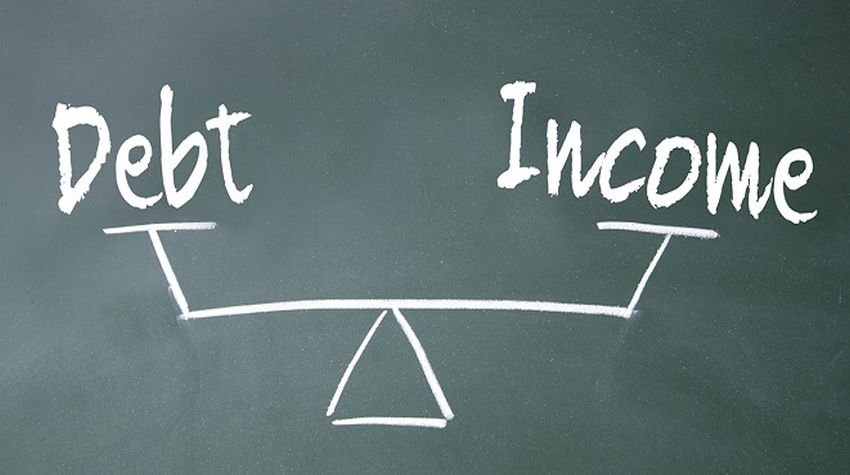
    Here we break down what the debt-to-income ratio means—for the nation’s financial health, and for yours. The latest headlines tell a now-familiar story: Canadian household’s debt loads have increased once again, with the debt-to-income ratio hitting 176.9% in June 2020. But what is this ratio, why is it rising, and—most importantly—do you need to worry about it?

    What is the debt-to-income ratio?

    First things first. The debt-to-income ratio is a measure of how much debt a household is carrying, relative to its disposable income—that is, the money you have available to spend or save, after taxes and other non-discretionary expenses, such as EI and CPP contributions, are made.

    A ratio of 176.9% means that, across all Canadian households, we collectively owe almost $1.77 for every dollar of disposable income we have. That’s very close to the all-time high of 178% in late 2017.

    How did we get here?

    There are two overarching reasons why we’ve ended up with our current level of collective debt.

    Debt is cheap.
    The basic laws of economics tell us that when prices fall, demand increases.  Here’s why that’s important for the debt-to-income ratio: what really matters is not the total amount borrowed, but the cost to service that debt over time—that’s the debt-service ratio.  The lower the interest rate, the cheaper it is to borrow money and service that debt, and thus the more debt a household can afford to carry.

    Over time, the debt-service ratio has remained pretty constant even as the household debt-to-income ratio has risen.  In 1980, for example, the ratio of household debt to personal disposable income was just 66%, or $0.66 owed for every dollar of disposable income.  Back then, however, the bank rate—the minimum rate of interest that the Bank of Canada charges on one-day loans to financial institutions, now superseded by the target interest rate—was 12.89%, compared to just 0.25% today.

    In practical terms, $100 borrowed for a year at 1980 rates would cost nearly 20 times as much as it would to borrow today.  This astonishing drop in interest rates accounts for why the debt-service ratio has remained relatively steady over time, fluctuating between about 12% and 15% from 1990 to the first quarter of 2020, and falling from 14.81% in the last quarter of 2019 to 14.67% in the first quarter of 2020.

    Our relationship to debt has changed.
    Over time, we’ve become more and more accepting of borrowing as a normal part of household finances. When the ability to borrow became available as a tool to “bring forward” our household spending, lots of us decided to do so. And as the cost of borrowing progressively dropped, we ramped up our debt.

    This behaviour is consistent with what financial economists call consumption smoothing, or the idea that we can maximize happiness by spreading our resources over our lifetimes to achieve the highest possible total standard of living. From this point of view, in the words of former Bank of Canada Governor Steven Poloz, “Simply put, debt is a tool that allows people to smooth out their spending throughout their life.”

    Does the debt-to-income ratio matter?

    The general consensus is that excessive levels of debt make households financially vulnerable.  Economic shocks are sudden and unpredictable changes in the variables that affect the overall economy, such as an unforeseen rise or fall in the cost of commodities, an unexpected shift in consumer spending, or a housing or stock market crash.

    At the individual level, however, you’re likely more concerned that too much household debt might mean you can’t make your mortgage, student loan or car payments if something unexpected happens—such as normal fluctuations in interest rates, or the loss of your job.  (These are personal financial shocks, compared to the economy-wide macroeconomic shocks of falling commodity or housing prices.)  Research into Canadians’ debt shows that younger people, those with household income of at least $100,000, and those with mortgages have more debt than older Canadians, non-homeowners, and those with lower incomes.

    The use of debt is also correlated with optimism about our financial futures.  People who expect their financial situation to improve over time are much more likely to have more debt: a Statistics Canada study shows that peoples’ expectations about their financial situation are strongly correlated with both their levels of indebtedness and their debt-to-income ratio.  Even the most optimistic households, however, are still subject to borrowing rules set by lenders, such as the new mortgage insurance rules for the Canadian Mortgage and Housing Corporation, which will go into effect on July 1, 2020.

    What do I need to know about the debt-to-income ratio to plan my financial life?

    Here are two ways to think about whether the debt-to-income headlines affect you.

    The average might not apply to you.
    The debt-to-income figure represents an average for all Canadian households, including those who have little or no debt—meaning it must also include some very highly indebted Canadians.  In fact, research from the Bank of Canada shows that the number of highly indebted Canadians —those with a debt-to-income greater than 350%—doubled from 2005 to 2014, from about 4% to 8% of all households.  So a rising average amount of debt may not capture individual household changes, including yours.

    Your individual circumstances matter.
    The more debt you have, the more vulnerable you are to “shocks” that can impact your ability to repay it.  At the same time, however, your age, income, appetite for debt and expectations about your financial future will all combine to impact your approach to borrowing.

    If you want to maximize your financial peace of mind and protect yourself from the risk of being unable to meet your debt obligations over time, you could minimize borrowing while prioritizing paying back any existing debt.  A personal debt management plan, which maps out how you’re going to repay what you owe over time, will allow you to see past headlines to understand debt as one tool in your financial toolbox.


  • You Might Pay More Than Expected to Renew Your Mortgage…

    You Might Pay More Than Expected to Renew Your Mortgage…

    New accounting rules adopted by the banks mean they’re paying closer attention than ever before to your financial situation and your home’s value when you renew a mortgage. Mortgage renewals used to be utterly routine – a virtual rubber stamp. Now, if your credit score has taken a hit or your home has fallen in value, you might not qualify for the best available rates. The new accounting rules are called IFRS 9; IFRS stands for International Financial Reporting Standard. One effect of these rules is to cause banks to pay close attention to early warning signs that clients may run into trouble paying their mortgage.

    “Let’s say the bank has noticed that your credit score went from 750 to 580 and/or your loan-to-value ratio has gone way up,” said Robert McLister, founder of RateSpy.com. “Anything that worsens risk in a lender’s eyes is going to potentially warrant a higher rate at renewal.”

    Mortgage brokers estimate that anywhere from fewer than 5% to 15% of borrowers may be negatively affected by the new rules. The borrowers most vulnerable to getting an elevated mortgage rate are in expensive cities, such as Toronto and Vancouver, where young owners must juggle expensive mortgages and daycare if they have children. It’s difficult to track what banks are actually doing because there don’t yet appear to be any standardized policies. But mortgage brokers report that banks are in some cases doing soft credit checks, which means peeking at your credit file to see whether your credit score has worsened. Banks may also do appraisals on renewal to ensure that the ratio of the amount of your outstanding mortgage to the value of your home is declining as it should be.

    The risk of having to renew at higher rates just keeps growing for these and other lenders. Well-discounted five-year fixed-rate mortgages are close to one percentage point higher than they were last summer. Also, we’ve seen the emergence of a trend where mortgage rates today are higher for some people than others. For example, someone with a down payment of less than 20% now gets a rate that on average might be 0.35 of a point better than someone who puts down 20% or more. Below 20%, the borrower is required to pay for insurance that protects a lender against default.

    Mortgage stress tests for borrowers also influence rates. The stress tests are designed to see whether you can afford mortgage rates that are higher than current levels. If you’re renewing a mortgage and want to move to a new lender, you must be able to pass the stress test. If you can’t do that, you’re stuck with a current lender that has no need to offer you its best possible discount. Today’s reality of home ownership is that that those financial struggles of home ownership matter. If your credit score drops or your home falls in value, there can be consequences.

  • 5 Things You May Not Know About Mortgages

    5 Things You May Not Know About Mortgages

    How much of your payments go toward interest.

    Most mortgage payments are what they call blended payments, which combine repayments of the principal as well as the interest at once.  When you start paying off your mortgage, a significant part of your payments are going toward the interest, not the principal.  Over time, however, the principal of your loan decreases, which means that the amount you will owe in interest decreases as well.  As such, the portion of your payment that goes toward the interest will decrease over time, and the amount that goes toward the principal increases over time.  This is why additional lump sum payments make such a big difference when it comes to your mortgage; they go directly toward your principal, whereas your usual mortgage payments do not.

    Your current lender won’t always give you the best deal at renewal.

    Most homeowners renew their mortgage with the same lender that holds their current mortgage. No problem there – except that more than half of homeowners renewed their mortgages without negotiating different terms than what was presented to them in their renewal statement, according to a 2015 mortgage consumer survey.  Lenders are betting on the fact that you won’t want to switch lenders, and therefore aren’t bending over backwards to try and keep you.  That means that you can probably find better rates and/or more flexible terms elsewhere.  Don’t feel like shopping around?  Call your mortgage broker to do it for you.  Whether or not you used one for buying your home doesn’t mean that you can’t use them for refinancing.

    Lenders want your monthly housing costs to be less than 32% of your income.

    When your lender qualifies you for your mortgage, they use a system based on your reported and provable income as well as your debts.  They want to ensure that your monthly housing costs – including your mortgage, property taxes, heating, and condo fees, if applicable – don’t use more than 30-32% of what you’re brining in.  While this number is somewhat arbitrary and housing costs, incomes, and living expenses vary from one housing market to the next, if you don’t meet the criteria, then your mortgage application could be denied.

    Missing a mortgage payment doesn’t automatically mean foreclosure.

    It’s pretty obvious that missing a mortgage payment isn’t a good thing.  But life is full of unexpected surprises, and if you find yourself in a situation where you can’t come up with your mortgage payment one month, don’t throw your hands in the air and wait for the bank to issue an eviction notice.  Foreclosure proceedings are a lengthy process, and everyone, your lender included, wants to avoid them if at all possible.  So if you know you’re going to miss a mortgage payment, or if you already have, pick up the phone and call your lender.  You may be able to negotiate with them and figure out a new or interim payment plan to get you back on your feel, or maybe an early refinancing in order to lower your monthly payments.

    The posted rate isn’t always the best rate.

    Think of the posted rate as the opening offer in a negotiation.  Banks use the posted rate to provide a value proposition to their clients.  They often start with the posted rate and then offer discounts to preferred clients.  A savvy consumer needs to educate themselves and shop around.  Even if you get the secret or discounted rate, if you only get rates from one financial institution, you may still be paying a premium compared to other lenders.

  • Mortgage Approval Tips

    Mortgage Approval Tips

    For some buyers, getting financed can be a daunting task. It’s even more difficult if you’re self-employed. Working with an expert to navigate the application and fulfillment process is crucial. The following are several ways you can maximize your chances of getting approved for a mortgage:

    • Disclose all the properties you own. You have to tell your mortgage agent about all the properties you own and the mortgages involved.
    • Keep your taxes up to date. Lenders may decline your application if you owe taxes to Revenue Canada.
    • Communicate your reason for purchasing. Showing that you know what you’re looking for will make it easier to get the financing required.
    • Make sure your property meets minimum requirements. Each lender has different guidelines; we can help to make sure these are all met.
    • Know your down payment source. This is critical, as lenders want to know that the deposit is liquid and accessible.
    • At the time of application, keep your current financial situation stable. For the best rates, all income needs to be verifiable.
    • Be conservative with the value of a property. Purchasing a house beyond your means can become problematic in the future when you leave yourself with little to no disposable income.
    • Don’t look for the lender with the cheapest interest rate and then try to fit the lender’s policy. We can help you plan your financing and structure your loan with the features you need.
    • Use a mortgage broker. The paperwork that lenders require can be significant, and it’s important to get it right. We are here to guide you through the whole process.
  • Understanding GDS & TDS: What Can You Afford?

    Understanding GDS & TDS: What Can You Afford?

    When shopping around for a mortgage, there’s more to think about than simply finding the best mortgage rates. It’s important to also consider the terms and conditions of your mortgage, the size of your down payment, and whether or not you can afford the home (and monthly mortgage payments) you’re considering.

    While there are handy tools like a mortgage affordability calculator to help you figure out what you can afford, it’s a good idea to understand how lenders calculate your affordability and the formulas they use to do so.

    There are two standard measures of affordability lenders use to determine how much they’ll lend you. First, your Gross Debt Service Ratio (GDS) is calculated. This is the percentage of your income needed to pay all monthly housing costs: your mortgage, property taxes, heat, and 50% of your condo fees (if applicable). The industry standard for GDS is 32%, meaning you typically need a GDS lower than 32% to qualify for a mortgage.

    Calculating your GDS

    GDS = (Principal + Interest + Property Taxes + Heating + ½ Condo Fees) / Gross Income x 100

    Next, a lender will calculate your Total Debt Service Ratio (TDS), which is similar to a GDS but also takes into account your other monthly debts, like credit card payments, car payments, alimony, and loans. The industry standard for TDS is slightly higher than GDS at 40-42%.

    Calculating your TDS

    TDS = (Principal + Interest + Property Taxes + Heating + ½ Condo Fees) + Other Debts) / Gross Income x 100

  • What to Consider Before Your Mortgage Renews

    What to Consider Before Your Mortgage Renews

    Have you explored all your options?
    Once you receive your mortgage renewal statement, there’s nothing easier than simply signing on for another term. But while this may make sense in many cases, your family or financial situation may have changed. We can look for opportunities that could better meet your needs.

    Are you comfortable with your payments?
    If you’ve been feeling financially strapped each month making your mortgage payments, this could be the time to reduce them to a more manageable level. On the other hand, if you’re earning more, why not pay down your mortgage faster, saving thousands in interest!

    Do you need cash flow for other things?
    Your priorities may have shifted since you first bought your home, and your cash flow needs to shift too. Things like paying for a child’s education, planning a career change, or a major purchase may call for spending money on things other than your home. You may be able to refinance your mortgage to take this into account.

    Can you handle fluctuating rates?
    Some homeowners are nervous about any hikes in interest rates, while others are comfortable to go with the flow. Rates are tough to predict. It’s best to base your decision on your personal situation, not what you read in the news. We can help you decide whether to opt for fixed or variable rates.

    Will you sell soon?
    If you are likely to sell soon, consider a shorter term mortgage or one that has more flexible terms so you’re not penalized if you sell your house before the mortgage comes due.

    Are you thinking about a major renovation?
    You know that projects such as a new kitchen or an addition can make your home more valuable. But the cost of having the work done can tie up a lot of money. Before you renew, look at all your financing options, which may include getting an additional line of credit or keeping your mortgage payments low so you can have money on hand to finance the renovations.

    When do you want to be ‘mortgage-free’?
    If you’re planning extended time away from work or perhaps an early retirement, it may make sense to pay down your mortgage sooner, rather than later. While increasing your payments will raise your monthly payments now, ultimately you will save on interest and can prepare for that fabulous mortgage-free lifestyle!

    Could you use your home equity to fulfill other goals?
    Refinancing a mortgage can be one way to free up cash you need for other things, which could even include buying another property. Mortgage renewal time is an ideal occasion to review all your options.

    Have your insurance needs changed?
    If your financial situation has changed since you first took out your mortgage, review whether you need the same level of insurance in place to cover mortgage obligations.

    Are you getting the best rates & terms?
    In a competitive mortgage environment, your good credit history can make refinancing work to your advantage. We analyze mortgage markets daily to ensure you don’t miss any money saving opportunities.