Author: unimorweb

  • What You ‘Should’ Do with Your Tax Refund

    What You ‘Should’ Do with Your Tax Refund

    If you’re getting cash back this year from filing your income taxes, hold off on booking those plane tickets. There are ways to get the most ‘bang’ for your refund bucks.

    1. Contribute to a Registered Retirement Savings Plan (RRSP)

    If you spend your RRSP refund… you unknowingly end up investing less than you started with, and less than most think. If you spend your RRSP refund, you are converting dollars that have already been taxed into RRSP dollars that will be taxed again later when you withdraw the funds. Many people mistakenly think that if they put $3,000 in their RRSP and spend their refund, they’ve added $3,000 to their retirement fund. But if you’re in a 40% tax bracket and spend the $1,200 refund, you’ve only invested $1,800 of the $3,000 you started with. And if you reinvest that $1,200, you’ve already contributed $4,200.

    2. Pay Down Debt

    Attack those high-interest debts first. Credit cards and unsecured credit lines can charge interest ranging from 6 to 21% and can be a real strain on cash flow, preventing you from getting ahead. With credit cards typically charging 19 to 21% on unpaid balances, you are unlikely to find an investment that will guarantee you a higher return to justify investing rather than paying off debt.

    3. Put the Money Towards Your Mortgage

    This isn’t necessarily for everyone, but there are good reasons to consider making a lump-sum payment. Even though mortgage rates are very low, we know they will go up eventually. By putting a lump sum down on the mortgage now, the payments when you renew the mortgage may still be manageable. Using your tax return to pay down your mortgage will not only give you a guaranteed rate of return, but it will also ensure that you’re mortgage-free sooner and save you thousands in interest over the life of your mortgage.

    4. Open or Contribute to a Tax-Free Savings Account (TFSA)

    If your income is currently below where you project it to be at retirement, you may want to look at maximizing your TFSA. Similar to an RRSP, this account allows you to earn investment returns tax free. Although you receive no tax deductions, you are consequently not taxed on withdrawals. Not having any contribution room left for an RRSP is another argument for contributing toward a TFSA.

    5. Get Smart About Saving

    If you have children, keep in mind just how costly their post-secondary education is going to be. By catching up on RESP (Registered Education Savings Plan) contributions, you can receive up to a 20% matching contribution from the Canadian Government in the form of a Canadian Education Savings Grant. That’s an impressive rate of return on investment without taking any risk. Another option is to spend the funds on your own education as a means to improve your skill set and move up the ladder or transition to another career altogether.

    6. Look into Life Insurance

    It can be hard to see the benefits of this investment, but it’s worth remembering that anything can happen. Life insurance is essential, especially for young families. You need to cover your debts and protect from loss of income to ensure the well-being of surviving family members. Even though life insurance can be inexpensive, some young families have a difficult time finding the cash flow to pay for it. Using a tax refund to fund the annual premiums can be a way to not affect day-to-day living expenses but still ensure you and your family are protected in the event of premature death.
  • Discover How Your Credit Score is Calculated

    Discover How Your Credit Score is Calculated

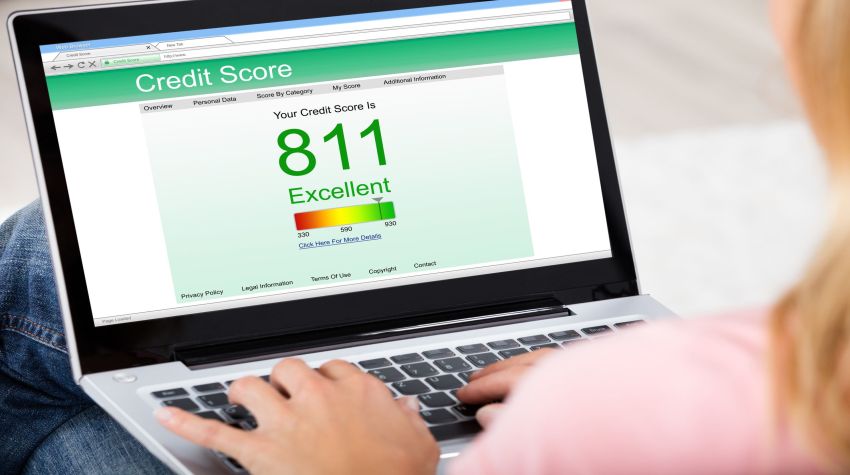
    Credit scores are based on a calculation system derived by FICO (Fair Isaac Corporation):  a company that developed a rating system to apply to your credit report that predicts how good or how risky you are with your credit.

    Scores are between 300 and 850 and just like your high school report card, the higher the number the better your score. There are five categories within the model that have specific weightings:

    Payment History: Your payment history makes up 35% of your credit score. It scores on how you’ve repaid your credit cards and loans. Missed or late payments and collections lower your score. Bankruptcy, credit counselling, settlements and liens also lower your score.

    What You Owe: The amount you owe is 30% of your credit score. The amount you owe on credit cards, credit lines and other revolving credit is compared to your total credit limit. On loans, the amount you owe is compared to the original amount borrowed. If you owe more than 75% of your total credit limit, your score drops.

    Length of Credit History: The length of time you’ve had and used each account is 15% of your credit score. The amount of time since the last activity on the account makes up part of this score.

    New Credit: The new credit section is 10% of your score. It consists of recent credit inquiries and the time since the inquiries were made. The new credit section also scores on accounts recently opened and the time since they were opened. An important part of this score is how you’ve rebuilt your credit after credit problems.

    Types of Credit Used: The type of credit used is 10% of your credit score and reports on the types of loans or revolving credit you’ve used.

  • How to Make Tax Time a Little Less Stressful

    How to Make Tax Time a Little Less Stressful

    Filing taxes without preparation is like running a marathon without training. It is a long, hard go. With good preparation, filing your next tax return will be more like a walk in the park. So start getting ready now and learn how to make tax time a little less stressful!

    Develop a System
    Create a practical filing system for your financial papers. First, make files for the categories required on your tax return. When next year’s deadline comes, everything will be pre-sorted. Group non-tax-related items into categories, and make a file for each category.

    Record Income & Expenses
    Keep a day-by-day record of all money coming in and going out. Close acquaintance with your financial situation leads to easy tax filing and eventually to prosperity. Keep receipts for everything, and make notes of small cash outlays. Update your records at least once a week. Pay bills on time and send invoices promptly. Acquiring this habit saves money and reduces bookkeeping.

    Use Software
    With simple bookkeeping software, easily track and calculate financial data. Spreadsheet programs, such as Excel and Numbers, provide tremendous flexibility and portability.

    File the Backlog
    File any piled-up documents for previous tax years. Get the job done with least effort by following this rule: If you touch a paper, file it.  Securely dispose of any unnecessary documents.

    Get Help
    The assistance of a professional bookkeeper or accountant is valuable for saving time and effort, as well as for ensuring accuracy. On the Internet, you’ll find many qualified, low-cost virtual assistants who will help you to set up a good system and to keep it running smoothly.

  • Mortgage Approval Tips

    Mortgage Approval Tips

    For some buyers, getting financed can be a daunting task. It’s even more difficult if you’re self-employed. Working with an expert to navigate the application and fulfillment process is crucial. The following are several ways you can maximize your chances of getting approved for a mortgage:

    • Disclose all the properties you own. You have to tell your mortgage agent about all the properties you own and the mortgages involved.
    • Keep your taxes up to date. Lenders may decline your application if you owe taxes to Revenue Canada.
    • Communicate your reason for purchasing. Showing that you know what you’re looking for will make it easier to get the financing required.
    • Make sure your property meets minimum requirements. Each lender has different guidelines; we can help to make sure these are all met.
    • Know your down payment source. This is critical, as lenders want to know that the deposit is liquid and accessible.
    • At the time of application, keep your current financial situation stable. For the best rates, all income needs to be verifiable.
    • Be conservative with the value of a property. Purchasing a house beyond your means can become problematic in the future when you leave yourself with little to no disposable income.
    • Don’t look for the lender with the cheapest interest rate and then try to fit the lender’s policy. We can help you plan your financing and structure your loan with the features you need.
    • Use a mortgage broker. The paperwork that lenders require can be significant, and it’s important to get it right. We are here to guide you through the whole process.
  • Pay Off Your Mortgage Early

    Pay Off Your Mortgage Early

    Paying off your mortgage may be the best investment you can make. A recent Canada Mortgage and Housing Corporation (CMHC) survey found that 68% of homeowners felt they could pay off their mortgage at a faster rate. You could be one of them; here are some ways to save money and pay off your mortgage early.

    Accelerate your payment frequency
    This is a very popular way to pay off your mortgage sooner. If you’re making monthly payments on a $300,000 mortgage with a 3.00% interest rate amortized over 25 years, it will cost you $125,920.44 in interest. By increasing your payment frequency to accelerated bi-weekly payments, you will shave off nearly three years of your amortization schedule and save $16,058.57 in interest.

    Round up your mortgage payment
    This also can be relatively painless. Every dollar counts when it comes to paying off your mortgage. If your accelerated bi-weekly mortgage payments are $543, consider rounding up to $600 instead. The extra $57 will save you thousands of dollars in interest over the term of your mortgage, and you’ll barely notice the difference in your monthly budget.

    Refinance to a shorter-term amortization
    You can refinance into a mortgage for 10, 15 or 20 years. Your payments will be higher on a longer-term loan, but perhaps not as high as you think, especially in the current low-interest rate environment.

    Make lump-sum payments
    Adding just $1,000 extra to your mortgage per year will allow you to pay it off four years sooner, and combined with accelerated bi-weekly payments, it will slice off an additional $8,000 in interest. You won’t miss the $1,000, especially if you save it up over the year.

    Consider a lower rate
    With today’s low mortgage rates, it doesn’t hurt to negotiate a better rate. The difference between a 2.99% rate and a 3.20% rate adds up to about $6,000 in interest over the mortgage term.

    Paying off your mortgage early may not seem like a big deal, but when you’re ready to retire, you will thank yourself!

  • What Does ‘Pre-Approval’ Mean?

    What Does ‘Pre-Approval’ Mean?

    Getting pre-approved by a lender makes it easier for buyers to find the home they want within their price range. However, it does not guarantee you’ll get the mortgage. It is simply a certificate saying that through a quick calculation of your finances, the lender has determined what you can afford.

    During the pre-approval, the lender will also fix the interest rate, which is usually good for between 60 and 90 days. If a better rate promotion occurs during the buyer’s fixed period, the buyer is usually eligible for that as well. It is likely the pre-approval will lead to a mortgage, but there have been situations when this has not been the case. The best way for buyers to ensure success is to understand what the lenders look for and to be prepared. Another way is for buyers to work with their mortgage broker, who can flag any potential challenges.

    A lender will determine a buyer’s debt load by calculating the Gross Debt Service (GDS) Ratio and Total Debt Service (TDS) Ratio. The GDS Ratio is the proposed housing costs, including mortgage payments, taxes, heating costs and 50% of condo fees, if applicable, and shouldn’t be more than 32% of the buyer’s gross monthly income. TDS calculations take into account all the buyer’s other debt obligations and shouldn’t be higher than 40%.

    Once a buyer has made a conditional offer on a home, the lender will gather all the documentation required to approve the mortgage, including a credit report. Other items a lender will need are a letter from an employer confirming the buyer’s salary, information about other sources of income, bank accounts, loans and other debts, proof of financial assets, sources of the down payment and deposit, and proof that the buyer has the funds for closing costs.

    Problems can crop up during the mortgage approval process. For example, the buyer’s credit score may be too low, the buyer might not have the right source for the deposit funds or the closing costs may not have been deposited in an account. The buyer’s GDS and TDS ratios might also be too high.

  • 7 Ways to Avoid Credit Card Fraud

    7 Ways to Avoid Credit Card Fraud

    Credit cards are convenient — until someone else gains access to your account. Credit card fraud is on the rise, and is becoming a real concern that can affect any Canadian. In fact, in 2012, the RCMP reported that 541,580 accounts nationwide had been compromised in some way. Here’s how you can protect yourself from credit card fraud.

    1. Ask for receipts for all of your purchases – If you notice charges that you didn’t make, report them to your card issuer right away.

    2. Keep your card in sight at all times – keep your card in sight at all times in order to prevent “skimming” — which happens when a thief passes your credit card through a card reader that records your information from the magnetic strip.

    3. Be extremely cautious over the phone – Unless you’ve initiated the phone call, don’t give out your personal information over the phone.

    4. Protect your credit cards when travelling – Carry your cards with you at all times, or make sure they are in a secure location such as your room’s safe.

    5. Be careful online – Make sure you enter personal information only on secure and reputable websites. Clear your logins and passwords, and be on alert for phishing scams.

    6. Use credit cards with enhanced security features – If your credit and debit cards don’t already use chip and PIN technology, you might be putting yourself at risk.

    7. Shred old documents – Make sure that you store all of your financial records in a secure place inside your home, and shred any document with your name on it before you toss it in the recycling bin. If you suspect you’ve been a victim of credit card fraud, follow these four steps:

    • Contact your credit card issuer to report any suspicious activity.
    • Contact your credit bureau to have a fraud alert placed on your credit report.
    • Contact your local police.
    • Report credit card fraud to the Canadian Anti-Fraud Centre.

    According to the RCMP, credit card fraud cost Canadian merchants $365 million in 2012 alone, and more often than not, those costs are passed down to the consumer. Make sure you’re doing your part to protect yourself and your money.

  • How Does an Appraiser Determine the Value of a Home?

    How Does an Appraiser Determine the Value of a Home?

    An appraiser will use a variety of methods to determine the fair market value of a property. The definition of market value is the highest price reasonably expected at any given time when an interest in land is sold by a willing seller to a willing buyer after adequate time and exposure to the market.

    Appraisers are specifically trained and have sufficient experience to develop a realistic opinion of the value of a property. There are three basic methods when determining the estimated value of your home:

    Cost Approach: This estimates the cost of building a new home identical to yours at current prices, subtracting accumulated depreciation and adding the estimated land value.

    Income Approach: This approach is for income-producing property and is based on the assumption that the current value is the income potential when the property is developed to its highest and best use. The net operating income from the property is capitalized into value by an appropriate method and rate.

    Direct Comparison Approach: This is based on the idea that an informed purchaser would pay the same price for acquiring another existing and equivalent property. The estimated value is based on the selling price and listings of comparable properties in the area.

    The appraiser uses the most appropriate approach and supports the evaluation with the most reliable, factual and relevant market data. At times it’s advantageous for a buyer or a seller to get an independent appraisal to determine the value of the property. This will ensure you’re not paying too much or, if you are a seller, that the listing price is in line with the market.

  • Debt Fatigue: How Long is Too Long to Be in Debt?

    Debt Fatigue: How Long is Too Long to Be in Debt?

    Despite record levels of debt across the country, fewer Canadians than you might think are making moves to reduce the amount of money they owe. According to a new CIBC poll, 25% of Canadians say they haven’t taken any action at all to accelerate debt repayment, while only 16% have talked to a financial advisor about ways to better manage their debt. It all points to signs of debt fatigue – feeling completely overwhelmed by the amount of money you owe but continuing to spend anyway. Six months? One year? Three years? There is no set timeline for when someone reaches debt fatigue, but when you throw your hands in the air and just start spending; you can bet you’ve hit your saturation point.

    There’s some nonchalance there, we’ve had an extended period of low interest rates, and the banks and financial institutions have done a very good job at marketing. You’ll see an ad for a car: just $199 every two weeks. People think ‘hey, that’s not bad,’ without stopping to think about the long term. People may think, ‘a bagel and a coffee a day is only five bucks a day. It’s no big deal,’ but when you add it up for a whole year, that’s close to two thousand bucks. Payday loan companies make borrowing seem easy too.

    According to a poll, 60% of Canadians currently hold debt. Historically low interest rates have played a huge role in this. People have a lot more debt than they have in the past; because it’s relatively inexpensive debt, debt seems like less of an issue. Although debt repayment has been the number one priority for Canadians, according to CIBC research, less than half of Canadians are taking concrete steps to lighten the load. The latest poll found that 46% of Canadians have cut spending in order to better manage debt, 34% have implemented a household budget, and 20% have made at least one lump sum payment toward debt on top of regular payments.

    With debt having become a fact of life for so many Canadians, there are ways to tell when your money woes are growing just as fast as your interest owing.  The standard question is: ‘Are you having trouble sleeping at night?’  When it becomes an issue with people’s day to day lives, when you can’t sleep or are worrying too much, when it’s affecting relationships, then it really starts to wear mentally. When you get a credit-card statement that shows you that if you make the minimum monthly payments and it will take you 84 years to pay off the debt – that really starts to hit home.

    Seek Support & Make a Plan

    Things don’t need to reach a crisis point before you can seek help and start chipping away at debt.  For starters, talk to someone, whether it’s an independent advisor, someone at your bank branch, a credit counsellor, or friends and family.  Money doesn’t have to be a taboo subject.  Don’t be afraid to say to someone, ‘Hey I can’t afford that. If they want to go out for dinner you can say ‘why don’t we do a potluck or we’ll order in pizza’.  Everybody struggles with these issues, and you’d be surprised once you start talking about it how other people can relate to where you’re at.

    Don’t let terms like budgeting or tracking spending scare you off.  Find money-management strategies that work for you, just the way you’d integrate exercise into your routine.  If you know you’re not a morning person, it’s unlikely you’re going to commit to going for a jog every day before work.  If you don’t have the patience to write down every single purchase you make over a 30 day period, try giving yourself a weekly spending limit instead.

    If you find it too easy to use debit or credit cards, use cash.  Be clear about what it is you’re trying to accomplish. The thing most people do not do is look at what their goals are.  If you have $500 in your account, do you buy the Lululemon hoodie you really like or do you put that money toward your home renovation fund?  You have to have goals, because that allows you to make choices.  Turn to technology to keep you on track too, most banks have tools where you can receive an alert via text message, phone, or email if you’re getting close to or have surpassed your customized budget.

    By Gail Johnson – Yahoo Finance

  • 10 Ways to Save Money on Your Credit Cards

    10 Ways to Save Money on Your Credit Cards

    Selecting the wrong credit card is a common mistake many people make. There are so many products out there that you have to first identify your needs in order to pick the one that works best for you. Next is reducing the costs associated with using that little piece of plastic.

    Here are 10 tips to help you do just that:

    1.  Pay your balance in full: Every month, every time. It’s the only way to guarantee you won’t spend a cent in interest.

    2.  Know the interest rate on your credit card: 28% of Canadians don’t know the rate they are paying, according to a 2007 survey of 4,000 Canadians by Credit Canada. Make it your business to find out.

    3.  Ask your bank about low-rate credit cards: If you can’t pay your balance in full every month, switch to a low-rate card. All it takes is a simple phone call to your bank. These no-frills cards charge 10-12% interest, sometimes even less.

    4.  Ditch the retail credit cards: Some chain store cards charge upwards of 30% interest, the very top rates on the credit card heap.

    5.  Don’t make cash advances on your credit card: The interest rate kicks in from the day you withdraw the money – there is no interest-free period. And some credit cards charge a higher interest rate for making these advances.

    6.  Make sure the reward program offers real rewards: If you aren’t paying your balance in full every month, your rewards are being cancelled out by the interest you are paying.

    7.  Negotiate the annual fee: Ask your bank to waive this fee. If you’re a longstanding customer with a good credit rating, you just might get lucky.

    8.  Know exactly when the bill is due: If you miss your credit card payment by even one day, you’ll have to pay full interest for that month. And you don’t need to wait until you get your statement to pay the bill – you can do that anytime.

    9.  Reduce the number of credit cards you have: If you aren’t paying off your balance each month on all your cards, minimize the damage and carry only one card.

    10.  Lower your limit: Some people just can’t handle having access to $10,000 or more on their credit card. If you’re one of them, call your bank and simply ask to lower your limit to prevent yourself from overspending.