Tag: interest

  • Fixed Rate vs Variable Rate Mortgages: Which Should You Choose?

    Fixed Rate vs Variable Rate Mortgages: Which Should You Choose?

    One of the biggest decisions you’ll face when getting a mortgage is whether to choose a fixed or variable rate mortgage. At the moment, it’s hard to go wrong with either one. After all, mortgage rates in Canada are at historic lows. But the type of mortgage rate you choose is something you should spend some time considering, as the best choice depends as much on your individual circumstances as it does on any economist’s interest rate outlook.

    What is a Variable Rate Mortgage?
    A variable-rate mortgage is a mortgage linked to the Bank of Canada Prime Lending Rate and fluctuates during the mortgage term. You can obtain an open or closed variable rate mortgage, but the most common term is a 5-year variable closed.

    For example, at the time of this writing, the Bank of Canada Prime rate is 2.45%. If a variable mortgage were priced at Prime -.90%, your interest rate would be 1.55%. If Prime were to increase by 0.25% to 2.70%, then your mortgage interest rate would rise accordingly to 1.80%. Even though variable mortgage rates fluctuate during the term, the monthly payment remains the same.

    What is a Fixed Mortgage Rate?
    A fixed mortgage rate stays fixed for the length of the mortgage term. It’s available in terms ranging from 6 months to 10 years, although the most popular term is a 5-year fixed rate. Unlike variable rates, which move with the Prime Lending Rate, fixed mortgage rates follow Canadian bond yields.

    Fixed rates are usually higher than variable rates, with the higher rate trade-off being cost certainty. Fixed-rate borrowers are willing to pay a premium to lock in their rate for a specific time period. Banks price fixed rates higher than variable rates because they present more risk to the mortgage lender due to the rate commitment made to the borrower.

    A History of Fixed vs. Variable Mortgage Rates
    If you look back at the past 20 years or so, variable mortgage rates have been consistently lower than fixed rates with only a couple of exceptions. This might make it seem like choosing a variable rate would be a no-brainer, but it’s not so clear-cut. At the moment, both types of mortgage rates are at historic lows, and the gap between them is very narrow. So, there are fewer savings to be had by going with a variable rate mortgage, while the risk of rising interest rates remains.

    Reasons to Choose a Fixed Mortgage Rate
    Here are three reasons why you might want to choose a fixed-rate mortgage:

    1. You expect interest rates to rise.
    While no one knows when the prime rate will rise and fall or by how much, the economy can provide signals that rates may be headed upwards or downwards. If you anticipate that mortgage rates may be on the way up and you can secure an attractive fixed-rate, all things being equal, it might be your best choice.

    2. You have limited budget flexibility.
    Perhaps you’re buying your first home, or your affordability has been stretched with the mortgage you’re taking on. If you lack the flexibility in your budget to handle a sudden increase in your mortgage payment, your best option is to choose the certainty of a fixed-rate mortgage.

    3. You are a risk-averse by nature.
    Regardless of your financial position, if you are risk-averse by nature and having a variable interest rate will cause you sleepless nights, it’s not worth the hassle. Go with the fixed-rate mortgage.

    Reasons to Choose a Variable Mortgage Rate
    Sometimes a fixed rate is the way to go. But here are four reasons why a variable mortgage might be the right choice:

    1. You expect interest rates to fall or remain flat.
    A variable-rate mortgage could be the best choice in a period of a stable or falling prime rate, even if it’s only slightly lower than the going fixed rate because the terms of a variable mortgage are generally more flexible than those of a fixed mortgage. (see #4)

    2. You have plenty of budget flexibility.
    The numbers don’t lie. Over the long term, you’ll be ahead of the game by choosing a variable rate. But there’s some risk involved. If your cash flow situation is good and you can withstand the potential of a sudden increase in your mortgage interest costs, a variable rate could be worth the risk.

    3. You are risk-tolerant by nature.
    If you are a person who can handle a fair amount of risk, then you probably have the fortitude to handle the potential ups and downs of a variable mortgage, all things being equal.

    4. You Plan to Sell Your House
    One of the biggest drawbacks of a fixed-term mortgage is the potential for astronomical penalties, should you decide or be forced to move in the middle of your mortgage term.

    Fixed-mortgages can be subject to something called an Interest Rate Differential charge or IRD. Variable mortgages are usually only subject to a more predictable 3-month interest penalty if the borrower breaks the mortgage early. So, if you think that you might move before the end of your mortgage term, the variable rate is probably a safer bet. You could opt for an open mortgage to avoid the penalty, but the interest rates will be far higher.

    How to Reduce Variable Rate Mortgage Risk
    If you opt for a variable rate, you are assuming some risk if interest rates rise suddenly in the middle of your term. Yes, there is the option of converting to a fixed rate, but that forces you to try and time the market, and that’s not likely to end in your favour.

    You can reduce the risk of a variable mortgage by increasing your monthly mortgage payment amount to match what you would be paying with a higher fixed rate. For example, let’s say you have a choice between a variable rate mortgage at 1.75% with a monthly payment of $1600 and a fixed-rate mortgage at 2.25% with a monthly payment of $1685.00.

    You could opt for the lower interest rate but increase your monthly payment to match the fixed-rate payment of $1685.00. This will increase the amount of money going towards your principal, increasing your interest savings, and providing you with a buffer should interest rates rise.

    The Bottom Line on Fixed vs. Variable Mortgage Rates
    There is no shortage of prognosticators ready to tell you that a fixed or variable rate is the best choice. They always seem to know what’s going to happen in the future. However, the truth is that no one knows exactly where interest rates are headed. There are far too many unknown variables that can alter the course of the economy. For example, how many rate forecasters saw COVID-19 coming at the outset of 2020.

    The bottom line is that choosing a fixed or variable rate has as much to do with your individual circumstances, such as your long-term plans, budget flexibility, and your personal risk tolerance level as it does with the cold hard numbers.


  • What Money-Savvy Kids? 5 Lessons to Set Them Up for Financial Success

    What Money-Savvy Kids? 5 Lessons to Set Them Up for Financial Success

    As parents, it can be overwhelming to think about everything we need to teach our kids — whether it’s showing them how to cross the street safely, introducing them to the alphabet or teaching them to ride a bike. Unfortunately, money still seems to be a taboo educational topic — even among families. Teaching your kids about money lessons is essential for raising adults who are comfortable talking about and handling their finances. By following these tips, you can create a solid financial foundation for your kids.

    1. Talk About Family Finances
    We’re not suggesting that you study your financial spreadsheets with your kids for a family fun night, but your children can’t get comfortable talking about money until they know you’re comfortable talking about it. By setting up a consistent family budget meeting — you don’t have to call it that if the b-word scares/bores everyone — your gang can get in the habit of discussing topics like how much money it takes to keep your household functioning and why it’s important to plan for big purchases.

    If kids get the opportunity to give their input — and no, they don’t get the deciding vote, even if they outnumber you — it will empower them to take responsibility for how the household spends its money. It can start with something simple like: We have $50 extra spending money this month. Would you rather go to a drive-in theater or save the money so that next month we could go on a camping trip?

    2. Show Them Why Saving Pays
    Your child’s method of saving will evolve as they get older but teaching the basic value of setting aside money will help them avoid the temptation to make an impulse buy each time they have money in their hands.

    Use Real Dollars & Coins
    Using physical cash and coins is great for helping younger children understand the concept, as it allows them to see how their nickels and dimes (and dollars) can really add up. You can start out by teaching kids to budget their money — consider using one piggy bank for savings, another for spending and a third for giving.

    Open a Bank Account
    When they’re ready, you can take the next step by opening a bank account for your child. Many banks have accounts specifically for minors if their parents also bank there, which can help your children save on fees that banks may charge for regular accounts.

    By bringing them along to a physical location to open their bank account, you’ll help your kids become more comfortable dealing with financial tools and institutions. That way, banks won’t seem as intimidating when your kids open their own accounts as adults.

    Teach Them About Compound Interest
    Additionally, use their savings accounts as an opportunity to teach kids about compound interest — a basic financial concept that explains how your money can grow by earning interest on the interest.

    3. Let Them Learn the Value of Their Money
    Getting your children to value their money can give them a head start on money management skills. It starts with understanding where the money comes from (the ATM doesn’t count). Whether you pay them an allowance, they receive money as gifts from relatives or they’re making their own money (yes, even a lemonade stand business counts), your children will better understand how much a dollar is worth if they learn how to budget their money early on. Accounting for each dollar allows a child to learn decision-making skills that will prepare them for later in life when they’re parcelling out their paycheck.

    Ask them questions like: Is it worth doing an extra chore to have their pick in the candy aisle at the grocery store? By giving them the power to make that decision, your children will be able to apply the same money concepts when deciding as an adult whether it’s worth working an extra shift to buy those new shoes or taking on a side gig to pay to build an emergency fund.

    4. Don’t Let Investing Be Only for the Rich
    Your kids don’t need to become the next Warren Buffett to learn the value of investing. And they don’t need to be rich to start (and neither do you). No matter what their age, kids can learn about growing wealth by investing a small portion of their money. We recommend starting with a very small amount since there is, of course, a risk that their investment could lose value. It’s a tough lesson, but one that’s easier to accept if your child lost a week’s allowance rather than a lifetime savings.

    And investing doesn’t require a large cash outlay to start, especially if you work with a brokerage that allows you to open a custodial account and invest in fractional shares. For just a few dollars, your kids can pick a couple of companies that make their favorite toys or movies, then check the stock price each week to see how their investment is faring. If your family is the competitive type, let every member invest in a different stock and see whose stock grew the most at the end of a year.

    5. Don’t Make Debt a Four-Letter Word
    You want to protect your kids from all the bad things, so if you don’t talk about debt, they won’t end up in it, right? Maybe. But probably not. Giving them the tools to understand debt is a better way to avoid bad debt and responsibly handle the good debt that they’ll face in their lifetime.

    Differentiate Good Debt vs. Bad Debt
    So how can you teach kids the difference between bad and good debt? Remember these two factors:

    • What’s the interest rate?
    • What’s the value of the item they’re going into debt for?

    As a general rule, if you’re borrowing money at a higher rate than you can earn by investing, that’s bad. For example, if a credit card charges 18% interest, you can’t reasonably expect to get those kinds of returns on investments, so that’s a bad debt. However, if you get a mortgage with a 3% interest rate, there’s a good chance you could invest that money and make more in interest.

    It’s also important to teach kids that bad debt vs. good debt involves the types of things and events that they’d want to use the credit for. Borrowing money to buy a candy bar? Bad debt. Borrowing money to invest in a mower so you can start making money cutting the neighbor’s lawns? Good debt (since they’ll in theory be using that borrowed money to make more money).

    Get Real About Student Loans
    One of the biggest decisions kids will have to make early on in regard to debt is whether to take out student loans. Start talking to your teens early about how student loan debt could affect their lives after college. Although it can be a very personal decision, encourage them to consider the costs and benefits of student loan debt. For instance, is the private, out-of-state school with the gorgeous campus worth the debt burden if they’re getting an education degree? Teaching your kids early about how to use debt and credit lines responsibly — perhaps by adding them as an authorized user — will let them see the benefits of building a solid financial foundation.

    Start Small
    And if all this is a little much for your youngest kids to understand, you can introduce this money lesson with one of these debt free charts. Start by deciding on a bigger purchase your child wants but doesn’t have enough cash for yet — but small enough that they can “pay it off” in a few weeks or months. Each time they make a “payment” to you, they can color in another section of the chart. By the end, they’ll have a better understanding of what it means to pay off debt, and you’ll have another piece of art to hang on the refrigerator. Win-win.

  • How to Prepare for the Upcoming Tax Season

    How to Prepare for the Upcoming Tax Season

    Many Canadians’ year-end tax prep may be a little different as 2020 draws to a close. Taking a close look at your personal balance sheet before December 31 is a routine exercise that can help you make the most of your savings, reduce your tax bill and boost your tax refund in the new year. But a slew of pandemic-linked emergency benefits and relief measures this year means there may be some additional financial housekeeping you need to do this time. Here are some tips to make sure you start off the 2021 tax season on the right foot:

    Paying Taxes on Your Emergency Benefits
    The first round of emergency benefits Ottawa rolled out during the pandemic did not have any tax withheld at source. If you received either the Canada Emergency Response Benefit (CERB) or the Canada Emergency Student Benefit (CESB), you’ll have to include 100% of those payments in your 2020 tax return. The government will send you a T4A tax reporting slip for 2020 showing the total amount you report.

    How much tax you’ll actually end up paying depends on your overall income for 2020. For example, if you made $27,000 from work in 2020 and received $8,000 worth of CERB, your taxable income for the year would be $35,000. Both the income you received from CERB and your job would be taxed in the same way.

    You May or May Not Have to Pay Taxes
    “If you’re under $12,000 in total income for the year, you don’t have to worry about any income taxes next year,” says Frank Fazzari, a chartered professional accountant at Fazzari & Partners. With the second round of COVID-19 benefits that became available in September—the Canada Recovery Benefit (CRB), Canada Recovery Sickness Benefit (CRSB), and Canada Recovery Caregiving Benefit (CRCB)—the government is withholding 10% in taxes at source.

    This, however, may be insufficient to cover your tax liability, Jamie Golombek, managing director of Tax and Estate Planning with CIBC Private Wealth Management. In addition, when it comes to the CRB, you may have to pay money back if your additional income for 2020 is more than $38,000. The claw back rate is $0.50 for each dollar of CRB received for net income over this amount. If you’ve received either round of benefits you may want to set aside some funds to cover any taxes or payments, you may owe come tax season next April.

    Repaying Emergency Benefits You Don’t Qualify For
    If you have to repay any COVID-19 benefits you didn’t qualify for, it would be best to return the funds by the end of the year. There is no obligation to return the payments by the end of the year. But repaying after December 31 means the amounts will show up on your T4A for 2020 and you may have to pay taxes on them. If you end up paying taxes on money you return, the CRA will eventually make you whole but you may have to wait until you file your 2021 tax return in the spring of 2022 until that happens. The process is based on general tax rules in the Income Tax Act that apply to repayments of taxable income.

    The Simplified Home Office Deduction
    If you’re one of the 2.4 million Canadians who’ve been working from your couch, the kitchen table or the kids’ bedroom this year because of COVID-19, you’ll likely be able to claim some home-office costs on your 2020 tax return without having to sift through receipts or ask your employers to fill out forms.

    If you’re an employee who’s been toiling at home more than 50% of the time over at least four consecutive weeks in 2020 due to COVID-19, you’ll be able to claim a deduction of $2 for every work-from-home day up to a maximum of $400. This is what the CRA is calling a temporary flat-rate method of calculating the home office deduction. If you’re an employee with significant home office expenses, you can use the current “detailed method” of calculating the home office tax break, the CRA has said.

    TFSA Withdrawals
    There are no COVID-19 rule changes affecting tax-free savings accounts, but many Canadians have ramped up their contributions this year, according to a recent study from BMO. While a smaller percentage of Canadians was able to put as much money as they had planned into a TFSA this year, those who did were able to save up a little extra, the data suggests. Overall contributions were up 9.5% year over year.

    If you’re planning to draw down on some of your TFSA savings soon, you may want to do so before the end of the year. Whenever you take money out of a TFSA, an equivalent amount of TFSA contribution room frees up in your account—but that doesn’t happen until the following calendar year.

    RRIF Withdrawals
    If you turned 71 in 2020, you have until December 31 to convert your registered retirement savings plan (RRSP) into a registered retirement income fund (RRIF) or registered annuity—that’s standard. If you already have an RRIF, though, remember Ottawa reduced the required minimum withdrawal for 2020 by 25%.

    One-time COVID-19 Payment for Persons with Disabilities
    Ottawa has also established a one-time, non-taxable payment of up to $600 for persons living with disabilities to help soften the impact of extra expenses caused by the pandemic. Being eligible and applying for the disability tax credit is one of the qualifying criteria to receive the payment. If you haven’t applied for the DTC yet, you’re still in time. Ottawa moved the application deadline from September 25 to December 31.

    Charitable Donations
    Charitable donations are especially important in a year that has seen jobless numbers skyrocket, domestic violence spikes, and marginalized communities struggle disproportionately with the impact of COVID-19. Both the federal and provincial governments offer donation tax credits that, when combined, can result in tax savings of around 50% of the value of your gift in 2020, depending on where you live. From the federal government alone, Canadians get a tax credit of 15% credit on the first $200 of charitable donations and 29% on anything beyond that amount.


  • Tips for Reducing the Overall Cost of Your Mortgage

    Tips for Reducing the Overall Cost of Your Mortgage

    Should You Pay Off Your Mortgage Early

    When you get your first mortgage, it’s hard for many people to focus on the end game, especially given that so many people put so much effort into saving up the minimum down payment, or even making use of grants or various cash-back programs that some lenders offer. It’s important that you keep all your options on the table so that when you’re ready to focus on your long-term strategy, your mortgage allows you to take action, whatever that may be.

    Option #1: Start smart and maximize your down payment.
    While it’s possible to get away with only putting 5% to 10% down on a home purchase, the single biggest cost-cutting measure you can do is to maximize your down payment. Not only will you owe less, reducing the overall interest you pay, but you’ll avoid having to pay mortgage loan insurance premiums—a fee buyers pay for the privilege of putting less than 20% down on a home.

    Option #2: Buy what you can afford.
    It sounds simple. Buy a home that fits your budget; the reality is when it comes to buying a home most of us struggle. On one side we want our dream home. On the other is the desire to be fiscally smart. Quite often, it’s a trade-off. But if you focus on buying within your budget (not the maximum mortgage amount your bank has agreed to lend you, but the mortgage that works with your financial plan), then you’re less likely to dip below the 20% down payment, and more likely to stick to your plan of paying off the debt sooner.

    Option #3: Shop for the best rate.
    Buying a home is stressful. Quite often, buyers will stick with banks or financial institutions they know. But when shopping for the best mortgage rate, it’s actually better to cast your net wide and far. Consider credit unions, as quite often these institutions can offer much better rates and terms than some major banks.

    Option #4: Pay attention to when interest is charged.
    Most standard mortgages in Canada charge interest semi-annually—that means twice a year the lender calculates what interest you owe, based on the outstanding principal debt and the accumulated interest on that outstanding debt. This is known as semi-annual compounding interest (compounding because it’s interest on interest). The rate at which compound interest grows depends on the frequency of compounding, the higher the frequency, or the number of compounding periods, then the greater the compound interest. For that reason, a loan with a 10% interest rate, but compounded annually, will actually accrue less interest than a loan with 5% interest that is compounded semi-annually, over the same time period.

    Option #5: Accelerated payments.
    When finalizing your mortgage consider going from one monthly payment to accelerated payments. This adds two extra payments per year, which reduces your principal debt just a tad bit faster.

    Option #6: Lump sum or extra payments.
    But the real key to paying off your mortgage debt faster is to get a mortgage that allows you to make extra payments. Most mortgages allow borrowers to make annual prepayments of 10% to 20% of principal, without extra fees. These extra payments go directly towards paying down the principal. If possible, however, try and avoid mortgages that only allow you to make extra or lump sum payments on the mortgage anniversary—as this can reduce the likelihood of the extra payment.

    Option #7: Lower your amortization.
    Those who want to pay off their mortgages sooner should choose the shortest possible amortization. While typical amortization periods are for 25 years, you can opt for as short as 10 years or as long as 30 years (if you made a down payment of 20% or more on your home). Forcing yourself to pay off the mortgage in fewer years translates into lower interest costs and substantial savings. The hitch? Your regular monthly or accelerated payments will be much higher.

    Option #8: Increase your regular payments.
    To give yourself the best of both worlds, consider going with a longer amortization, but increasing your regular payments using your mortgage loan prepayment privileges. For instance, if your monthly mortgage payment is $1,000 you could increase this to $2,000 per month if your loan terms allowed for double-up payments. In effect, you would be paying off a 20-year mortgage in just 10 years. Better still, you’d have the flexibility to switch back to the lesser regular monthly payment if you were to experience any changes like a sudden job loss or the birth of a child.

    In the end, the answer as to whether or not you should pay off your mortgage early really boils down to what’s important to you in both your short-term and your long-term financial plan.


  • Canada’s Climbing Debt-to-Income Ratio: What You Need to Know

    Canada’s Climbing Debt-to-Income Ratio: What You Need to Know

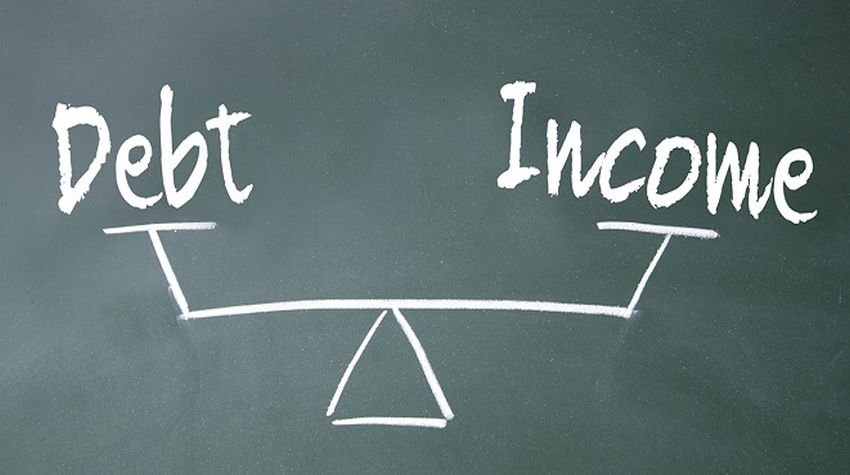
    Here we break down what the debt-to-income ratio means—for the nation’s financial health, and for yours. The latest headlines tell a now-familiar story: Canadian household’s debt loads have increased once again, with the debt-to-income ratio hitting 176.9% in June 2020. But what is this ratio, why is it rising, and—most importantly—do you need to worry about it?

    What is the debt-to-income ratio?

    First things first. The debt-to-income ratio is a measure of how much debt a household is carrying, relative to its disposable income—that is, the money you have available to spend or save, after taxes and other non-discretionary expenses, such as EI and CPP contributions, are made.

    A ratio of 176.9% means that, across all Canadian households, we collectively owe almost $1.77 for every dollar of disposable income we have. That’s very close to the all-time high of 178% in late 2017.

    How did we get here?

    There are two overarching reasons why we’ve ended up with our current level of collective debt.

    Debt is cheap.
    The basic laws of economics tell us that when prices fall, demand increases.  Here’s why that’s important for the debt-to-income ratio: what really matters is not the total amount borrowed, but the cost to service that debt over time—that’s the debt-service ratio.  The lower the interest rate, the cheaper it is to borrow money and service that debt, and thus the more debt a household can afford to carry.

    Over time, the debt-service ratio has remained pretty constant even as the household debt-to-income ratio has risen.  In 1980, for example, the ratio of household debt to personal disposable income was just 66%, or $0.66 owed for every dollar of disposable income.  Back then, however, the bank rate—the minimum rate of interest that the Bank of Canada charges on one-day loans to financial institutions, now superseded by the target interest rate—was 12.89%, compared to just 0.25% today.

    In practical terms, $100 borrowed for a year at 1980 rates would cost nearly 20 times as much as it would to borrow today.  This astonishing drop in interest rates accounts for why the debt-service ratio has remained relatively steady over time, fluctuating between about 12% and 15% from 1990 to the first quarter of 2020, and falling from 14.81% in the last quarter of 2019 to 14.67% in the first quarter of 2020.

    Our relationship to debt has changed.
    Over time, we’ve become more and more accepting of borrowing as a normal part of household finances. When the ability to borrow became available as a tool to “bring forward” our household spending, lots of us decided to do so. And as the cost of borrowing progressively dropped, we ramped up our debt.

    This behaviour is consistent with what financial economists call consumption smoothing, or the idea that we can maximize happiness by spreading our resources over our lifetimes to achieve the highest possible total standard of living. From this point of view, in the words of former Bank of Canada Governor Steven Poloz, “Simply put, debt is a tool that allows people to smooth out their spending throughout their life.”

    Does the debt-to-income ratio matter?

    The general consensus is that excessive levels of debt make households financially vulnerable.  Economic shocks are sudden and unpredictable changes in the variables that affect the overall economy, such as an unforeseen rise or fall in the cost of commodities, an unexpected shift in consumer spending, or a housing or stock market crash.

    At the individual level, however, you’re likely more concerned that too much household debt might mean you can’t make your mortgage, student loan or car payments if something unexpected happens—such as normal fluctuations in interest rates, or the loss of your job.  (These are personal financial shocks, compared to the economy-wide macroeconomic shocks of falling commodity or housing prices.)  Research into Canadians’ debt shows that younger people, those with household income of at least $100,000, and those with mortgages have more debt than older Canadians, non-homeowners, and those with lower incomes.

    The use of debt is also correlated with optimism about our financial futures.  People who expect their financial situation to improve over time are much more likely to have more debt: a Statistics Canada study shows that peoples’ expectations about their financial situation are strongly correlated with both their levels of indebtedness and their debt-to-income ratio.  Even the most optimistic households, however, are still subject to borrowing rules set by lenders, such as the new mortgage insurance rules for the Canadian Mortgage and Housing Corporation, which will go into effect on July 1, 2020.

    What do I need to know about the debt-to-income ratio to plan my financial life?

    Here are two ways to think about whether the debt-to-income headlines affect you.

    The average might not apply to you.
    The debt-to-income figure represents an average for all Canadian households, including those who have little or no debt—meaning it must also include some very highly indebted Canadians.  In fact, research from the Bank of Canada shows that the number of highly indebted Canadians —those with a debt-to-income greater than 350%—doubled from 2005 to 2014, from about 4% to 8% of all households.  So a rising average amount of debt may not capture individual household changes, including yours.

    Your individual circumstances matter.
    The more debt you have, the more vulnerable you are to “shocks” that can impact your ability to repay it.  At the same time, however, your age, income, appetite for debt and expectations about your financial future will all combine to impact your approach to borrowing.

    If you want to maximize your financial peace of mind and protect yourself from the risk of being unable to meet your debt obligations over time, you could minimize borrowing while prioritizing paying back any existing debt.  A personal debt management plan, which maps out how you’re going to repay what you owe over time, will allow you to see past headlines to understand debt as one tool in your financial toolbox.


  • You Might Pay More Than Expected to Renew Your Mortgage…

    You Might Pay More Than Expected to Renew Your Mortgage…

    New accounting rules adopted by the banks mean they’re paying closer attention than ever before to your financial situation and your home’s value when you renew a mortgage. Mortgage renewals used to be utterly routine – a virtual rubber stamp. Now, if your credit score has taken a hit or your home has fallen in value, you might not qualify for the best available rates. The new accounting rules are called IFRS 9; IFRS stands for International Financial Reporting Standard. One effect of these rules is to cause banks to pay close attention to early warning signs that clients may run into trouble paying their mortgage.

    “Let’s say the bank has noticed that your credit score went from 750 to 580 and/or your loan-to-value ratio has gone way up,” said Robert McLister, founder of RateSpy.com. “Anything that worsens risk in a lender’s eyes is going to potentially warrant a higher rate at renewal.”

    Mortgage brokers estimate that anywhere from fewer than 5% to 15% of borrowers may be negatively affected by the new rules. The borrowers most vulnerable to getting an elevated mortgage rate are in expensive cities, such as Toronto and Vancouver, where young owners must juggle expensive mortgages and daycare if they have children. It’s difficult to track what banks are actually doing because there don’t yet appear to be any standardized policies. But mortgage brokers report that banks are in some cases doing soft credit checks, which means peeking at your credit file to see whether your credit score has worsened. Banks may also do appraisals on renewal to ensure that the ratio of the amount of your outstanding mortgage to the value of your home is declining as it should be.

    The risk of having to renew at higher rates just keeps growing for these and other lenders. Well-discounted five-year fixed-rate mortgages are close to one percentage point higher than they were last summer. Also, we’ve seen the emergence of a trend where mortgage rates today are higher for some people than others. For example, someone with a down payment of less than 20% now gets a rate that on average might be 0.35 of a point better than someone who puts down 20% or more. Below 20%, the borrower is required to pay for insurance that protects a lender against default.

    Mortgage stress tests for borrowers also influence rates. The stress tests are designed to see whether you can afford mortgage rates that are higher than current levels. If you’re renewing a mortgage and want to move to a new lender, you must be able to pass the stress test. If you can’t do that, you’re stuck with a current lender that has no need to offer you its best possible discount. Today’s reality of home ownership is that that those financial struggles of home ownership matter. If your credit score drops or your home falls in value, there can be consequences.

  • 5 Things You May Not Know About Mortgages

    5 Things You May Not Know About Mortgages

    How much of your payments go toward interest.

    Most mortgage payments are what they call blended payments, which combine repayments of the principal as well as the interest at once.  When you start paying off your mortgage, a significant part of your payments are going toward the interest, not the principal.  Over time, however, the principal of your loan decreases, which means that the amount you will owe in interest decreases as well.  As such, the portion of your payment that goes toward the interest will decrease over time, and the amount that goes toward the principal increases over time.  This is why additional lump sum payments make such a big difference when it comes to your mortgage; they go directly toward your principal, whereas your usual mortgage payments do not.

    Your current lender won’t always give you the best deal at renewal.

    Most homeowners renew their mortgage with the same lender that holds their current mortgage. No problem there – except that more than half of homeowners renewed their mortgages without negotiating different terms than what was presented to them in their renewal statement, according to a 2015 mortgage consumer survey.  Lenders are betting on the fact that you won’t want to switch lenders, and therefore aren’t bending over backwards to try and keep you.  That means that you can probably find better rates and/or more flexible terms elsewhere.  Don’t feel like shopping around?  Call your mortgage broker to do it for you.  Whether or not you used one for buying your home doesn’t mean that you can’t use them for refinancing.

    Lenders want your monthly housing costs to be less than 32% of your income.

    When your lender qualifies you for your mortgage, they use a system based on your reported and provable income as well as your debts.  They want to ensure that your monthly housing costs – including your mortgage, property taxes, heating, and condo fees, if applicable – don’t use more than 30-32% of what you’re brining in.  While this number is somewhat arbitrary and housing costs, incomes, and living expenses vary from one housing market to the next, if you don’t meet the criteria, then your mortgage application could be denied.

    Missing a mortgage payment doesn’t automatically mean foreclosure.

    It’s pretty obvious that missing a mortgage payment isn’t a good thing.  But life is full of unexpected surprises, and if you find yourself in a situation where you can’t come up with your mortgage payment one month, don’t throw your hands in the air and wait for the bank to issue an eviction notice.  Foreclosure proceedings are a lengthy process, and everyone, your lender included, wants to avoid them if at all possible.  So if you know you’re going to miss a mortgage payment, or if you already have, pick up the phone and call your lender.  You may be able to negotiate with them and figure out a new or interim payment plan to get you back on your feel, or maybe an early refinancing in order to lower your monthly payments.

    The posted rate isn’t always the best rate.

    Think of the posted rate as the opening offer in a negotiation.  Banks use the posted rate to provide a value proposition to their clients.  They often start with the posted rate and then offer discounts to preferred clients.  A savvy consumer needs to educate themselves and shop around.  Even if you get the secret or discounted rate, if you only get rates from one financial institution, you may still be paying a premium compared to other lenders.

  • 5 Ways to Pay Off Your Mortgage Faster

    5 Ways to Pay Off Your Mortgage Faster

    Purchasing a home is a major accomplishment, but with these 5 Ways to Pay Off Your Mortgage Faster, paying off your mortgage as early as possible will be the best investment you can make. Below are a few easy ways you can pay off your mortgage faster:

    1. Accelerated bi-weekly payments
    Instead of paying your mortgage on a monthly basis 12 times per year, pay your mortgage every two weeks for a total of 26 payments each year.

    Example: A $300,000 mortgage paid on a monthly basis with a 3% interest rate over 25 years will cost you $125,920.44 in interest. However, if you increase your payment frequency to accelerated bi-weekly payments, you will shave nearly three years off of your amortization schedule, and save $16,058.57 in interest.

    2. Round up your mortgage payments
    Make no mistake: Every dollar counts when it comes to paying off your mortgage. The quicker you can pay off your mortgage, the more you will save in interest. A painless way to make your mortgage disappear faster is to round up your mortgage payments. So if your accelerated bi-weekly mortgage payments are $543, consider rounding up to $600 instead. The extra $57 will do wonders to your mortgage balance and chances are you will barely notice a difference in your monthly budget. If you receive a raise, instead of increasing the cost of your lifestyle in the short term, consider throwing the extra amount you make onto your mortgage instead.

    Example: Bi-weekly payments on a $230,000 mortgage with a 2.75% interest rate over 30 years would be $468.53. Increase those bi-weekly payments by just $31.47 to $500, and you’ll shave nearly six years off of the amortization schedule.

    3. Put ‘found’ money towards your mortgage payments
    Unexpected sources of money such as a birthday cheque from a relative or a bonus at work are considered sources of ‘found’ money. ‘Found’ money can be easily applied to your mortgage without any impact to your budget because it wasn’t money you were expecting or counting on. Consider increasing your RRSP contributions, and then put your income tax refund directly towards the principal of your mortgage.

    Example: A one-time payment of $5,000 on a $250,000 mortgage at 3.75% over 30 years will decrease your mortgage amortization by over 12 months.

    4. Make a lump sum anniversary payment
    Most banks will allow you to make an extra mortgage payment each year, which is applied directly to the principal. Taking advantage of this by making a lump sum payment, even if it’s as small as $100 a year, is a great way to chip away at your mortgage.

    Example: An annual lump sum payment of $250 on a $400,000 mortgage at 3.50% over 25 years, combined with a bi-weekly payment frequency will decrease your mortgage amortization by over 3.5 years.

    5. Stay informed
    Once you have a mortgage and start making your payments, it can be easy to just forget about it because it’s an automatic payment. To be an informed homeowner, you need to keep up-to-date on interest rates and new mortgage options. You could potentially save a ton of money just by understanding what your options are.

    Example: Let’s say that interest rates have dropped since you took out your mortgage a few years ago, but you are in the middle of a five-year fixed term with your bank. By understanding what the penalties are for breaking your mortgage, and reapplying for a lower interest rate, you could potentially save thousands of dollars over the long run.

    While paying down your mortgage early will mean less interest paid over the lifetime of the mortgage, and a shorter amortization schedule, it’s not always the best decision for every homeowner. For example, if you have high interest debt on a credit card, no emergency fund savings, or if you haven’t started saving for retirement yet, the interest you would save on your mortgage will not be as beneficial to you as dealing with other financial issues. Armed with information and commitment, these tips will help you pay off your mortgage faster. The freedom that being completely debt-free brings is a dream for many Canadians, so take the time to do some calculations and figure out what options are right for you.