Author: unimorweb

  • Why These Homeowners Needed a Private Mortgage

    Why These Homeowners Needed a Private Mortgage

    Most of us don’t give much thought to private mortgages.  We are vaguely aware they exist, but perhaps have the impression they are mortgage solutions for financial derelicts, but that is not true.  Often, they are needed when bad things happen to good people.

    Private mortgages and B-lender mortgages are the fastest-growing segment of the Canadian mortgage industry.  One reason is because it’s much harder to qualify for an A-lender mortgage now than at any time in recent memory. High home prices, in major cities particularly, result in large mortgage requirements, and the mortgage stress test can put qualification out of reach for homeowners who previously had no such concerns.

    In addition, there are several situations people find themselves in which are not attractive to regular mortgage lenders.  These problems require solutions, but a different type of lender needs to step forward and help the homeowner get on track. Let’s look at three such situations.

    • This homeowner has too many debts, and his credit score is low. Notwithstanding lots of equity in his home, the banks have said no.
    • These homeowners are in the middle of a consumer proposal. The doors to the banks are firmly closed, yet they need to finance a car purchase, and they would like to improve their monthly cash flow.
    • This homeowner has large CRA debt. Banks and other A-lenders do not like refinancing to pay off CRA debt.

    1) Too Much Debt and Credit Score Too Low
    This person has been living proud and mortgage-free for several years, but meanwhile has racked up credit card debt that just won’t go away.  At first, people believe they can manage it, but the crippling high interest rates of 19.99% or more makes it difficult.  And when the cycle starts, they tap into other available credit to pay off the credit cards that are giving them a problem.  He has a nice town home with no mortgage, but $115,000 of unsecured debt and a credit score of 557.  The minimum monthly payment on the credit card debt was not much less than his take home pay from his job.

    The Solution
    We could see his credit score would zoom upwards once all the debts were cleared and no remaining balances.  A private lender would be happy to lend a new first mortgage on very favourable terms.  An annual mortgage interest rate of 5.99%, and a mortgage fully open after three months.  This means as soon as he is ready, he can refinance to an A-lender without penalty.  And when that happens, all the ugly credit card debt will be scrunched up into a mortgage at roughly 3% interest, with a monthly payment of around $500.  This is a game-changer compared to the $3,000 per month or so he was paying before.

    2) A Consumer Proposal
    These homeowners both have decent jobs and more than $200,000 equity in their home.  Three years ago, they both had to file a consumer proposal after a new business venture failed and left them with lots of consumer debt.

    They reached out for three reasons:

    1. Their bank, which holds their first mortgage, has told them they will not offer a renewal in late 2020.
    2. Their car lease is expiring in January 2020, and they want to exercise the buy-out option. They are being quoted high interest rates on a car loan.
    3. They are finding it tough, paying $1,300 each month towards the proposals, on top of their car payment, mortgage, taxes and utilities.

    The Solution
    The solution here is a one-year, private second mortgage for around $60,000.  Interest-only payments at a rate of 12%, and the monthly payment is only $600, which is half of what they are paying now on their consumer proposal.

    This small new mortgage will pay off their proposal completely and allow them to buy the car when it comes off lease.  After their proposal is paid off, they can rebuild their personal credit histories.  In late 2020, when their first mortgage matures, they won’t have to worry about the renewal.  They can refinance both mortgages into one new mortgage with a different lender.

    3) CRA Debt Problem
    This homeowner only owes $70,000 on his first mortgage, but he had neglected filing corporate taxes for a few years, and now owes CRA a significant amount of money.  There was a judgment against him for $49,000, which had been registered as a lien against the family home.  And another one looming for $133,000.  He had also accumulated a large amount of unsecured debt.  If you are self-employed and owe a lot of money to CRA, your borrowing options are very slim in the world of conventional mortgage lenders.  Occasionally, homeowners have tax debt that is so large it cannot be readily paid.  The result is a debt that can’t be negotiated away, with a creditor you can’t afford to ignore.

    The Solution
    The solution was either going to be a very large, disproportionate private second mortgage at a high interest rate (close to 12%) or to refinance the small first mortgage to a new private first mortgage at only 6.99%.

    He decided to take the first mortgage approach; paid off the CRA liens and all other personal debts.  As a bonus, the lender allowed him to partially pre-pay the mortgage payments in advance, so that the monthly payment for the new mortgage would be roughly what it will be when they refinance down the road – avoiding payment shock.  He contacted Equifax Canada to confirm the tax liens had been cleared and waited for his credit score to climb, unencumbered by a high debt load.  Sure enough, it all came to pass, and now he is refinancing the private mortgage into an A-lender, only six months later.

    These are three scenarios why a person may need a private mortgage, there are many other reasons.  It is important to remember that a private mortgage is a short-term solution to get you out of a tough financial situation.  It does not mean that you’ll be black-listed in the world of mortgages.

  • The 10 Best Ways to Save Money on Holiday Shopping

    The 10 Best Ways to Save Money on Holiday Shopping

    Christmas is right around the corner, and you had better be prepared.  Making sure that you have what you need for everyone on your list can be a challenge — and it can also be expensive.  If you want to avoid breaking the bank this holiday season, here are 10 tips to help you save money on Christmas shopping:

    1. Stick to a Budget
      First off, set a budget and stick to it.  Figure out how much you have to spend on your Christmas shopping.  Then, make a list of those you need to buy for.  If you have a list of what you want to get each person, it will save you time and keep your spending on track.
    1. Buy Inexpensive Stocking Stuffers
      Don’t go overboard on stocking stuffers.  It’s tempting to buy every little gadget available, but you need to watch out.  You might not be keeping track of the little things you buy, and they can add up.  This is a great chance to be frugal by shopping for little gifts at the dollar store and including some candies, nuts and mandarin oranges.
    1. Set Up a Gift Exchange
      You can cut down on shopping for extended family by setting up a gift exchange.  As your siblings grow up, get married and have children, your Christmas shopping list gets longer.  It can get out of hand unless you change the way you do things.  Draw names and each person will only buy for the one person whose name they drew.  Everyone gets a gift and you all save possibly hundreds of dollars.  It’s a winning situation and can be a lot of fun.
    1. Shop the Early Sales
      One of the best things you can do when it comes to the way you save money on Christmas shopping is to look for sales.  Shop early if a decent sale comes along.  Not only will this save you money, but it can save you the hassle of crowds as Christmas gets closer.
    1. Shop Online
      Once December gets advanced enough, the traffic and the crowds become unbearable.  Another way to avoid crowds and save money is to shop online.  You can often find products cheaper than you do in the store, and you don’t have to battle with others.  However, you do need to keep an eye on shipping costs to ensure you really are getting a deal.  Check for promo codes and sites that offer free shipping on holiday purchases.
    1. Save on Shipping by Ordering Early
      To save money on shipping, shop soon to give you time to use many sites’ free shipping options.  The closer to Christmas, the more you’ll need to pay for priority or express shipping.  This is also the case when you are sending presents to friends and family.  If you must pay for express or overnight shipping to get your gifts on time, you’ll pay so much more money.
    1. Stay Away from Extended Warranties
      During the holiday shopping frenzy, it’s hard to make decisions, and easy to say yes to whatever someone suggests. However, you need to be on your toes at check-out if you want to save money. Avoid extended warranties on your purchases.  If an item is defective, it’s likely to have issues within the standard warranty’s time frame.  Don’t spend extra money for coverage you probably won’t need.
    1. Buy Discounted Gift Cards
      There are plenty of places to buy discounted gift cards.  If you aren’t sure what to get, look for an experience. Discounted gift cards can provide you with a face value that exceeds what you actually pay.  This can be a way to look like a hero and save money.
    1. Consider a Bonus Gift Card from a Restaurant
      Want to save money on your own dining experience?  Some restaurants have been enticing people to buy gift cards by including a bonus gift card.  You might not save money on your immediate Christmas purchase, but you can save money on a future meal.  That can be worthwhile.  Additionally, you might be able to use the bonus card as a white elephant gift or a stocking stuffer.  While this can be a great deal, check out the bonus card as it may have an expiry date.
    1. Keep the Gift Receipts
      Finally, make sure that you keep all your receipts in a safe place since items may be broken or clothes might not fit. While some stores will accept returns without a receipt, it will be at whatever their lowest price has been on that item, so you might not get full value for it.  You will also need your receipt if you want to make a claim using your credit card.  Many credit cards offer extended warranties and protection against theft or returns.  If the store won’t take it back, you might be able to get money through your credit card perks — but you’ll need the receipt.

    With the right planning and a little savvy, you can save money on Christmas shopping every year and get the right gift for each person on your list.

  • Before You Make a Budget

    Before You Make a Budget

    You’re ready to start a budget — awesome!  You’re probably feeling excited and ready to get your money in order. But here’s the thing: It’s super easy to give up on budgets.  They can get complicated and require some maintenance.  So before creating your budget, take these simple steps to set yourself up for success:

    1. Track Your Spending

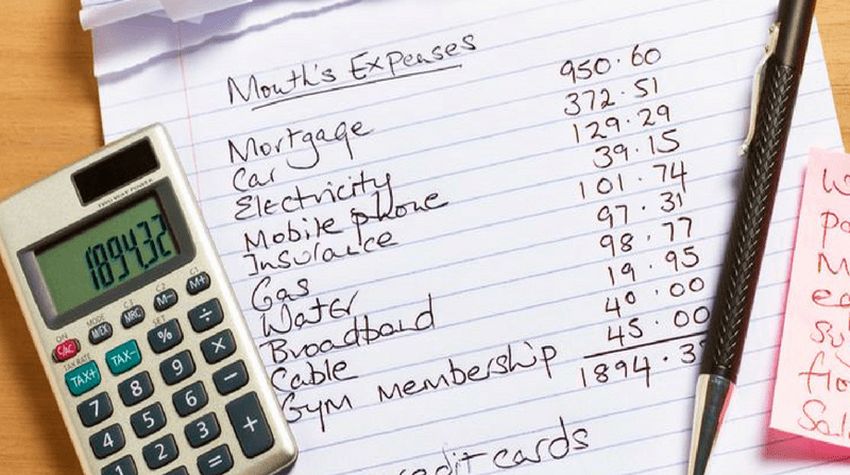
    Sometimes it feels like each paycheck disappears into thin air. The money lands in your account, you revel in your balance for one day, then you pay your monthly bills and it’s gone!

    That’s why it’s so important to track your spending. Before you even start a budget, you’ll want to get a clear idea of where all your money is going each month. There are plenty of ways to do this: good old-fashioned check book balancing, pen and paper or checking your accounts each day.  Get yourself used to keeping tabs on your spending by using an app like Mint.com.  This will help you better understand what your fixed expenses are each month and where you might be overspending.

    2. Set Yourself a Few Fun Goals

    Because budgeting can quickly become a dreaded chore, you’ll want to set yourself a few goals to keep you encouraged.  No, these don’t all have to be boring financial goals, like paying off student loans or starting an emergency savings.  Although those are great, work at a fun goal, like a road trip or cruise.  Then, hold yourself accountable by setting up a separate savings accounts and have money automatically come out of your chequing account.  You probably won’t even miss that small amount each week, but over time, it will contribute to your goal.

    3. Bundle Your Debt Into One Bill

    One of the trickiest parts about budgeting is keeping tabs on all your monthly payments, especially if you have debt.  Rather than making four different credit card payments each month and logging them in your budget, make life easier for yourself by combining them under one umbrella.  It will be much easier to budget with one, easy-to-manage monthly payment.

    4. Find Easy Ways to Cut Back Big Bills

    Building a budget will force you to take a good hard look at your monthly expenses. Ask yourself: Am I paying too much for any of these non-negotiables?  The answer: Probably.  Start with a bill that’s super easy to cut — car insurance.  Yeah, there’s no getting around it, unfortunately.  But to get the best deal, you’ll want to compare rates twice a year.  Sometimes you get complacent paying your bills, but there’s usually ways to save or haggle for a lower price.  Cable/internet is another good example, if you call, chances are there’s some kind of promo they can offer.

    5. Pick Your Go-To Budgeting Method

    Yes, there are budgeting methods — plural — but before you panic, we recommend using the 50/20/30 budgeting method for its simplicity.

    Here’s how it works:

    • 50% of your income goes toward essentials
    • 20% goes toward financial goals
    • 30% goes toward personal spending

    Of course, you’ll want to play around with this, but keeping these base-line percentages in mind will help you figure out how to allot your money for the month.


  • 6 Simple Rules of Decluttering

    6 Simple Rules of Decluttering

    When it comes to getting more organized, one of the key elements must be decluttering your life, home, and activity schedule.  However, the very idea of getting rid of personal possessions strikes fear into the hearts of many.  Do you feel this way?  As with any other process, it often helps to have some basic, simple to follow rules in place.  Consider these six rules of decluttering to help you take steps toward living a clutter-free life.

    1. Bring Less Home

    This is the most important rule to set before you even begin to purge items.  You need to determine and make a sincere effort to bring less stuff into your home.  There’s no point in putting forth the effort to declutter if you undo all your progress by buying more stuff.  Setting a mindset to shop with intention is the first step to clearing out the clutter for good. Remember, is this item you are about to purchase a need, or is it just a want?

    1. Document Your Nostalgia

    Nostalgia and memories are powerful emotions that can lead you to hold onto clutter. An effective compromise is to digitize your prized possessions.  You can scan the images of things like certificates or kids’ artwork into your computer and organize them into folders.  For three-dimensional pieces like trophies or prom dresses, take a photo of the item to add to your digital keepsakes.  Often, it’s the memory of the event attached to the item that holds the greatest nostalgia, not necessarily the physical item itself.

    1. Start Small & Simple

    One way to gain momentum in the declutter process is to start with the easy things.  Begin boxing up items that don’t hold much emotional attachment.  Doing so will lead to a sense of instant accomplishment and provide motivation for you to keep going.  Especially when the decision-making becomes tougher later.  This will be the motivation for cleaning the tougher areas of your home.  Start with doing a 15-minute session, as you clean an area, make your 3 piles: keep, give away or sell, garbage.  As you declutter, you can also ask yourself “why” you have kept this or that. This will help you in the future when you are tempted to bring other things home.  Remember the clutter didn’t appear overnight—so don’t beat yourself up over reversing the process.

    1. Lose the Duplicates

    Another relatively easy decluttering task involves getting rid of unnecessary duplicate items.  So, take a moment to go through your home and gather up all your duplicate articles of clothing, dish sets and books.  Then sort through them, keeping only your favorite colored piece or the one that is in the best condition.  You will free up space very quickly this way.  Remember, you don’t need to be a squirrel keeping piles of things everywhere.

    1. Ditch the Guilt

    An empowering decluttering strategy is to get rid of things you’ve been holding onto out of guilt.  It doesn’t matter how much you paid for that stylish coat if it’s not being used, and unwanted gifts are something else you should part with immediately.  The decision of whether to keep them is yours, so holding onto these items out of guilt is just weighing you down.

    1. Put Things in Their Place

    Another way to bring organization and order to your home is to make sure all your possessions have a designated place.  Once they have an assigned place, remember to always return them there.  Knowing where stuff belongs makes it easier to keep everything tidy and lowers the chance of clutter becoming a recurring problem.

    These 6 rules aren’t the definitive last word on clearing out the clutter in your life and home.  They also won’t remove all the difficulties from the process as you learn to part with items.  Hopefully, though, they will serve as guidelines to help you begin your own decluttering journey.

  • Millennial’s Guide to Home Buying

    Millennial’s Guide to Home Buying

    The transition from rent to home ownership has many obstacles for millennials. We’ve put together this guide to help young people make home ownership work for them. Buying your first home is one of the biggest financial decisions you’ll ever make.  For millennials struggling with lower income and savings, the dream of home ownership can appear out of reach in today’s market.

    All hope is not lost. Low mortgage rates and a gradually improving job market are empowering millennials to invest in property rather than rent. By taking a few practical steps, you can be well on your way to buying your first home. Investing in your first home requires careful planning, effective judgement and setting reasonable expectations.  Below is a six-step process for making that happen.

    1. Shop within your means.

    If you’re a millennial first-time buyer, the selection of homes you can afford is likely much smaller than established buyers. After all, you don’t have any equity yet, and will be relying purely on savings to invest in your first down payment. An important part of setting reasonable expectations is shopping within your means. Even if you qualify for a large mortgage, there’s no rule that says you must use it all. As a first-time home-buyer, your goal should be to finally start building equity. If you want a property but can’t afford it, you shouldn’t buy it. It’s as simple as that!

    1. Make sure you have enough for a sizeable down payment.

    In Canada, most professionals will advise you to make at least a 20% down payment on your property to avoid paying homeowner insurance.  While this is recommended, it might not always be possible, especially if you don’t want to delay your first real estate investment.  Even if you can’t pay at least 20%, you should still be prepared to make a decent down payment to minimize the total loan amount.  In Canada, 5% is the absolute minimum you must put down.

    1. Sort out your finances.

    Home ownership carries significant expenses that extend beyond your down payment and monthly mortgage payment.  Property tax, insurance, closing costs and utilities must all be factored into your decision both at the time of closing and after you’ve moved in.  When deciding to enter the market, be sure you have enough money to cover the down payment and all the ancillary costs associated with closing your home.  You’ll also want to budget carefully to make sure you can afford to pay your mortgage and living expenses after you’ve moved in.

    1. Compare neighbourhoods and regions.

    Most home-buyers are limited by geography in shopping around for property.  For millennials living in the big city, this can make affordability a greater challenge.  That’s why it’s essential to compare neighbourhoods and property types.  It’s equally important to consider location and whether you are willing to commute to work each day.  Proximity to your job may be convenient, but will likely be more expensive, especially if you live in a big city.  Working with a real estate agent can help you develop a better view of property values based on location and property type.

    1. Use a Mortgage Broker.

    Financing a home can be a complicated process.  That’s why more and more Canadians are turning to mortgage brokers to steer them in the right direction.  It used to be the case that most people went straight to their bank to finance their mortgage.  Now, many people visit a mortgage broker first.  That’s because a broker is tasked with one job: finding you the best deal possible.  They work with the big banks as well as non-traditional lenders to match you with the best interest rate and lending terms on the market.

    1. Maximize your benefits.

    The government has made it a little easier for first-time home-buyers to enter the market.  If you’re a first-time buyer, you can use your RRSP account to finance your down payment tax-free up to a maximum of $25,000.  This means you can take up to $20,000 from your RRSP account and put it toward a down payment with no tax penalty.  The First-Time Home-buyer Credit can also help you reduce the amount of taxes you owe.  Various provinces, such as Ontario, also have a land transfer tax refund that will greatly reduce the amount of land transfer tax you owe.

    As a millennial, shopping around for your first home can be both rewarding and challenging.  This six-step process will help you make the most out of your experience.

  • Homeowners Worried About Paying Down Debt as Rates Increase

    Homeowners Worried About Paying Down Debt as Rates Increase

    Younger homeowners have never experienced a significant rise in interest rates.  Many Canadian homeowners are worried about rising interest rates and how they will impact their budget, a new CBC Research survey finds.  Thanks to years of access to cheap money, household debt has ballooned in Canada.  Now that interest rates are rising, there are mounting concerns over how people will continue to pay down mountains of debt.

    Out of 1,000 Canadian homeowners surveyed online between October 5 -11, almost three-quarters of those with debt on their home, mainly mortgages, confessed they’re worried about rate hikes.  It won’t take much for most of them to feel the pinch: 58% of respondents said an increase of more than $100 in their monthly debt payments would force them to change their spending habits to make ends meet.

    Certified financial planner Shannon Lee Simmons says many people who come to her for help are in a similar predicament.  “I see that on a daily basis from clients who make relatively normal living wages, but everything is just budgeted to the dollar,” she said.

    “If you were to ask them, ‘Can you save $100 bucks a month?’ they might fail at that.”  Simmons says part of the problem is some homeowners have never experienced a significant rise in interest rates.  If you’re 40 right now and you bought your house at 30, you’ve pretty much had a decade of relatively low rates and that’s all you’ve experienced.

    Certified financial planner Shannon Lee Simmons says homeowners need to prepare for the true cost of rising interest rates.  Indeed, a 40-year-old would have been a toddler in 1981 when Canadian banks’ prime lending rate shot up above 20%. Conversely, since 2009, it has ranged between 3.70 and 5.75%.  Banks use the prime rate as a base to set their lending rates.  Failing to budget for heftier mortgage payments could lead to even more hardships, such as homeowners digging into their savings or turning to credit cards to make ends meet.

    The CBC survey findings come at a time when the Bank of Canada has already hiked the key interest rate four times since July 2017, from .50 to 1.50%.  The key rate influences the rate that banks charge for consumer loans and mortgages.  Many homeowners likely haven’t yet felt the full effects of the rate hikes because they’re still locked into a fixed mortgage, the most common type in Canada.  When their mortgage is up for renewal, ‘they might be in for a bit of a shock,” Simmons said.  The market expects another rate hike sometime in October, and some economists predict three more rate hikes in 2019.

    Bank of Canada governor Stephen Poloz says he believes Canada’s debt risk can be managed successfully.  Meanwhile, the amount of debt Canadian households owe has been on the rise for about three decades, totalling just over $2 trillion in August.  Mortgages make up close to three quarters of that debt.  For years, the Bank of Canada has expressed concern over rising household debt levels.  In 2011, Federal Finance Minister Jim Flaherty tried to temper borrowing habits with tighter mortgage rules.  They included lowering the maximum amortization period and requiring borrowers to qualify for a five-year, fixed-rate mortgage, even if they chose a variable mortgage with a lower rate. But interest rates remained low and Canadians continued to pile on debt.

     According to credit agency TransUnion, Canadians owed an average $260,547 in mortgage debt in the second quarter of 2018 — a 4.76% jump compared to the same period in 2017.  In the CBC survey, 36% of respondents said they had no debt on their home. 42% said they owed between $50,000 and just under $400,000 when combining both a mortgage and lines of credit.  Most respondents said they are very or somewhat comfortable with their current monthly payments.  However, as the survey shows, for many, that level of comfort diminishes when faced with the prospect of higher rates.

    And the impact could be more severe than some people think: When presented with a couple mortgage scenarios, less than a quarter of respondents were able to correctly estimate the added cost of a 2% interest rate hike.  Take, for example, a $400,000 mortgage with a 20-year amortization and a fixed five-year rate of 3.3%. With just a 2% rate increase, monthly payments would go up by about $400 a month.

    Simmons says many people find making the calculations daunting, but that homeowners need to understand the true cost of rising rates.  “Everyone is aware they’re going up, I just think that people aren’t necessarily prepared for how that impacts their daily life.”  It’s important to note that even with a projected rise in interest rates in 2019, they’ll still be relatively low compared to previous decades.  The Bank of Canada raises the country’s key interest rate to keep inflation in check, but governor Stephen Poloz, said in May that the bank will make rate decisions cautiously, considering the amount of debt households are still carrying.

  • How Much House Can You Afford?

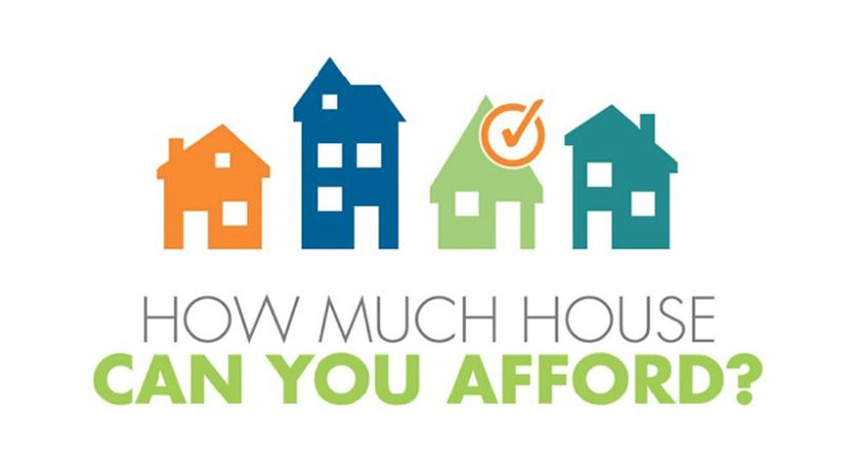
    How Much House Can You Afford?

    Shop for your new home the smart way! Learn how to calculate how much house you can afford before hitting that open house or applying for a mortgage. Buying your first home is one of the most important and exciting financial milestones of your life. But before you hit the streets with a realtor, you need to have a good sense of a realistic budget. Just how much house can you afford? You can determine how much house you can afford by following three simple rules based on different percentages of your monthly income.

    The Rules of Home Affordability

    Mortgage lenders use something called qualification ratios to determine how much they will lend to a borrower. Although each lender uses slightly different ratios, most are within the same range. Some lenders will lend a bit more, some a bit less.

    Your maximum mortgage payment (rule of 28): The golden rule in determining how much home you can afford is that your monthly mortgage payment should not exceed 28% of your gross monthly income (your income before taxes are taken out). For example, if you and your spouse have a combined annual income of $80,000, your mortgage payment should not exceed $1,866.

    Your maximum total housing payment (rule of 32): The next rule stipulates that your total housing payments (including the mortgage, homeowner’s insurance, and private mortgage insurance [PMI], association fees, and property taxes) should not exceed 32% of your gross monthly income. That means, for the same couple, their total monthly housing payment cannot be more than $2,133 per month.

    Your maximum monthly debt payments (rule of 40): Finally, your total debt payments, including your housing payment, your auto loan or student loan payments, and minimum credit card payments should not exceed 40% of your gross monthly income. In the above example, the couple with $80k income could not have total monthly debt payments exceeding $2,667. If, say, they paid $500 per month in other debt (i.e. car payments, credit cards, or student loans), their monthly mortgage payment would be capped at $2,167.

    This rule means that if you have a big car payment or a lot of credit card debt, you won’t be able to afford as much in mortgage payments. In many cases, banks won’t approve a mortgage until you reduce or eliminate some or all other debt.

    How to Calculate an Affordable Mortgage

    Now that you have an idea of how much of a monthly mortgage payment you can afford, you’ll probably want to know how much house you can actually buy. Although you cannot determine an exact budget until you know what interest rate you will pay, you can estimate your budget. Assuming an average 6% interest rate on a 30-year fixed-rate mortgage, your mortgage payments will be about $650 for every $100,000 borrowed.

    For the couple making $80,000 per year, the Rule of 28 limits their monthly mortgage payments to $1,866.
    ($1,866 / $650) x $100,000 = $290,000 (their maximum mortgage amount)

    Include Your Down Payment

    Ideally, you have a down payment of at least 10%, and up to 20%, of your future home’s purchase price. Add that amount to your maximum mortgage amount, and you have a good idea of the most you can spend on a home.

    Note: If you put less than 20% down, your mortgage lender will require you to pay mortgage insurance, which will increase your non-mortgage housing expenses and decrease how much house you can afford.

  • 3 Tips That Could Save You Thousands on Your Mortgage

    3 Tips That Could Save You Thousands on Your Mortgage

    Sean Cooper wiped off his $255,000 mortgage in exactly three years and two months, at age 30. He took on two extra gigs, in addition to his daytime job as a pension plan analyst in Toronto. He lived in the basement of his own house, while tenants “thumped around upstairs.” And he threw every spare penny at his quarter-million loan. Two years later, Cooper is mortgage-free and has written a well-reviewed book about it. But he is still working 70-hour weeks and living in the basement. The goal now, is to amass enough cash to retire extra early, if he so chooses.

    Clearly, the workaholic, frugal lifestyle suits him. And clearly, Cooper isn’t your average homeowner. But the advice he has is aimed at the more common species of mortgage-holder. You know, the kind with one job, and possibly a family, as well as a taste for things like work-free weekends, vacations and the occasional dinner out.

    It’s advice to which Canadians should pay particular attention now, as interest rates begin what most economists believe is a gradual but potentially long march upward. If you’ve been coasting along with your mortgage payments, now is the time to kick it into high gear. And if you’re looking to get a new mortgage or renew the one you have, doing some research is more important than ever.

    Cooper saved around $100,000 in interest with his extreme mortgage pay-down plan. You probably won’t be able to replicate that, but might still be able to shave thousands off your own mortgage interest by following his top three tips:

    1. Shop around – and not just for the lowest rate.
    Of course, you should get the lowest interest rate that you can. But rates aren’t the only thing to consider when comparing options. The point is to get the best deal, he notes, which isn’t necessarily the same thing as the lowest price. In addition to interest rates, pay attention to what Cooper calls the three P’s:

    • Prepayment privileges: As interest rates rise, a bigger chunk of your mortgage payments will go toward interest rather than the principal. That’s why it’s important to get a mortgage that will allow you to make large lump-sum contributions and increase your monthly payments if you decide to pay down your debt faster.
    • Penalties: What would happen if you were to break your mortgage? That’s a question every mortgage applicant should ask themselves. People wind up having to break their mortgage for any number of reasons: they move, they get divorced, they lose their jobs. And that can cost them thousands of dollars in mortgage penalties, which is why it’s important to look at the fine print.
    • Portability: Speaking of mortgage penalties, one way to avoid them if you move is to have a portable mortgage. This means you can transfer your mortgage to your new home and combine it with a new loan, if necessary.

    2. Make lump-sum payments whenever you can.
    Here’s a crucial nugget about lump-sum payments: Unlike your regular monthly installments, all the money goes toward reducing your principal. That’s why Cooper advises making lump-sum payments whenever you can. If you have no spare cash in your budget, you could still use what Cooper calls “found” money: A one-time bonus at work, an inheritance, gifts of money, or even your tax return.

    3. Accelerate your mortgage payments.
    The most painless way to ramp up your mortgage payments and shorten your amortization period is switching from monthly to so-called accelerated bi-weekly payments. For example, for a $300,000 mortgage, your monthly payments would be $1,418. If you switch to a simple bi-weekly arrangement, your payment is calculated as $1,418 × 12 months/26 weeks = $654. You’ll be saving a little bit in interest but not much.

    Accelerated bi-weekly payments, on the other hand, are calculated as follows: $1,418 × 12 months/24 weeks = $709. Your payment is slightly higher, covering the equivalent of a 13th monthly mortgage installment every year. Over time, that makes a substantial difference. In Cooper’s example, it saves $15,393 in interest and shrinks the amortization period by almost three years.